What is AHK-CU?
AHK-CU is a copper tripeptide (copper tripeptide-3), closely related to the better-known GHK-Cu. While GHK-Cu targets skin and connective tissue more, AHK-Cu focuses on hair growth and scalp circulation.
Comparison
Copper tripeptides compared
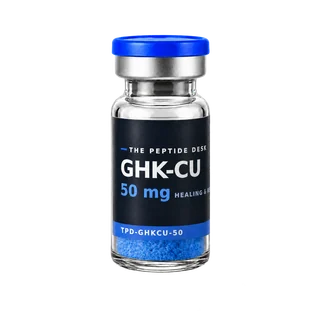
Related tripeptides from the TPD lexicon, as described there. Tap a card to open its entry.
Simplified by structure and focus of the entries. There is no direct comparison in a study. 1
How it works
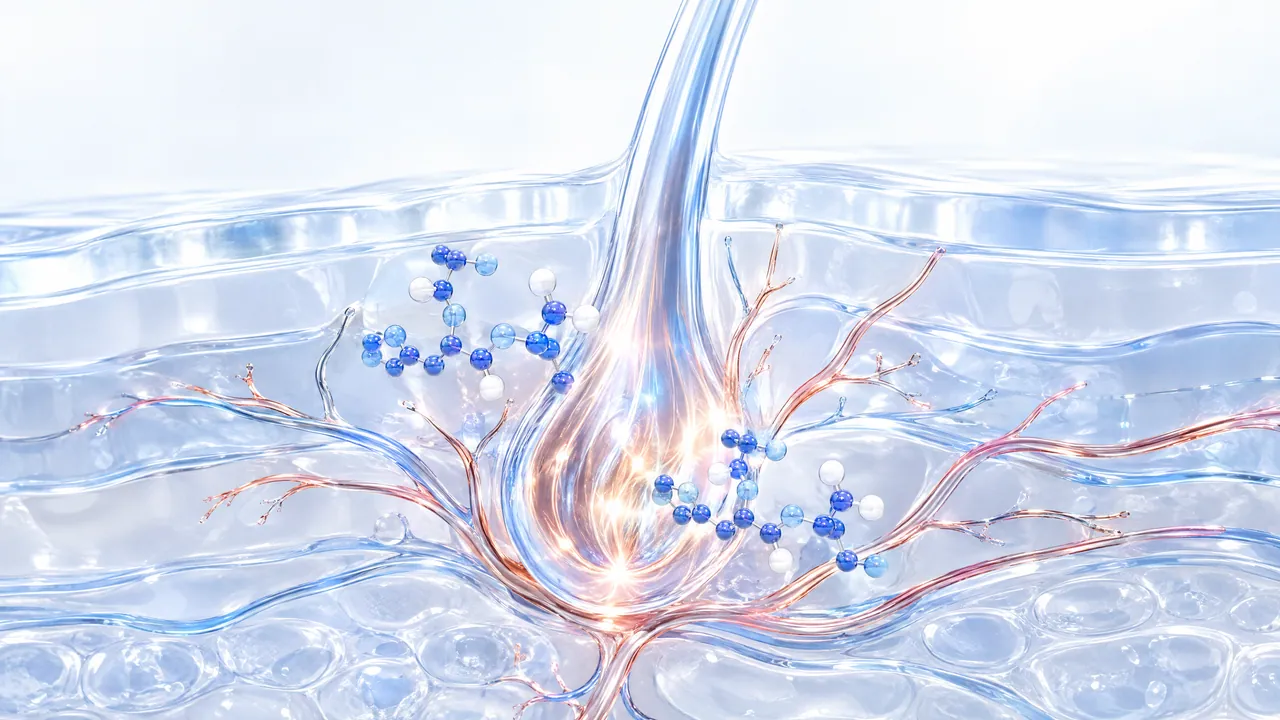
Copper peptides promote the formation of new blood vessels and support the cells important for hair growth (dermal papilla cells). AHK-Cu is meant to stimulate exactly these cells and support the hair follicles via better circulation.
Related copper-peptide information is in the GHK-Cu entry.
Where it acts
Where AHK-Cu acted in experiments
Tap a point or a card. Grey = observed. All from lab experiments with human tissue.
- Hair follicles (scalp)
Longer hair follicles and more division of papilla cells, in the lab outside the body1
Observed in trials
What you need
Supplies
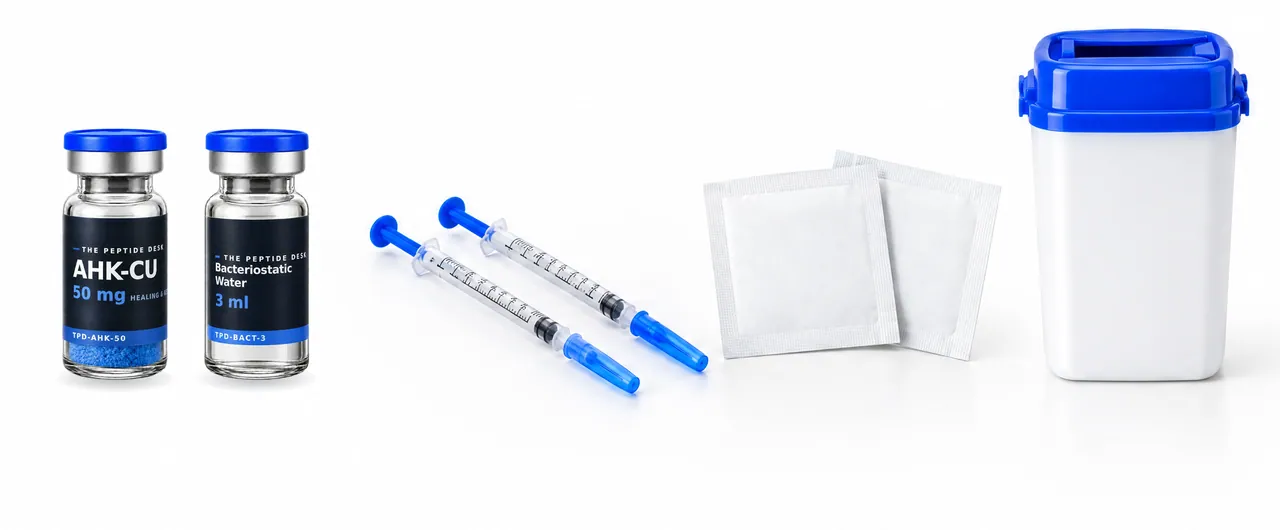
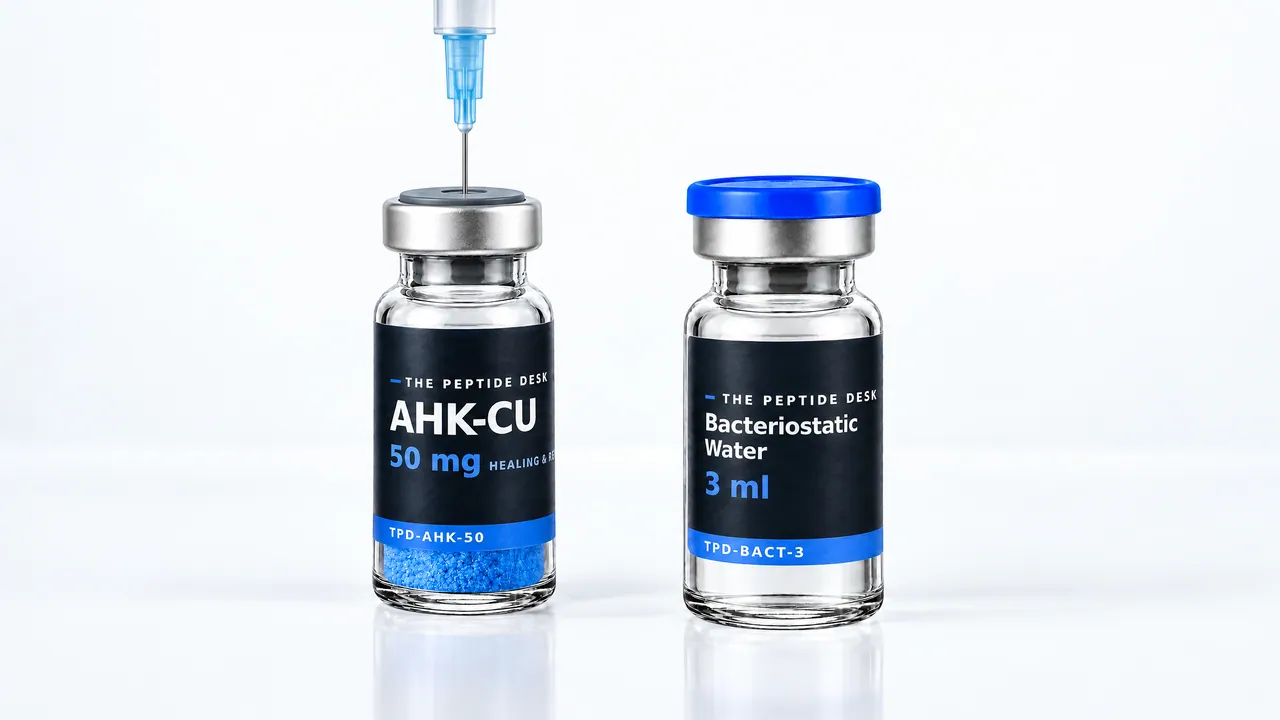
2 things, numbered as in the picture
Tick off what you already have. Vial and BAC water are our real shop photos at the same size.
-
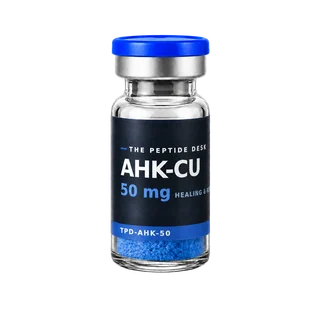
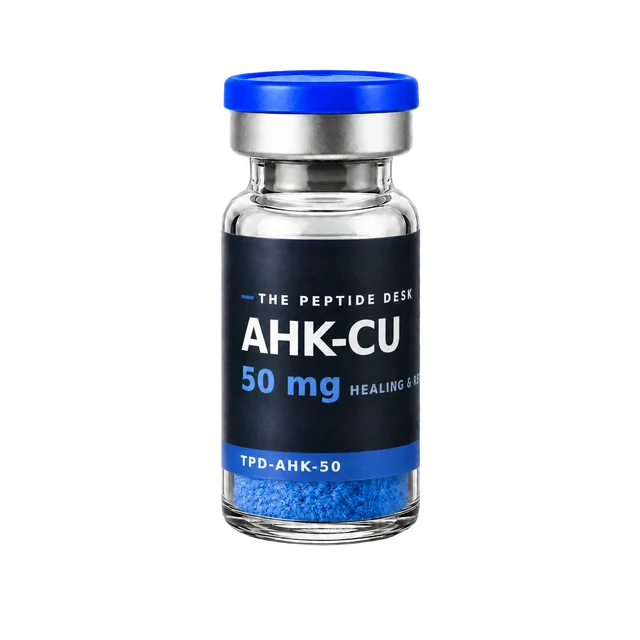
AHK-CU vial
The AHK-CU vial (lyophilized powder).
-
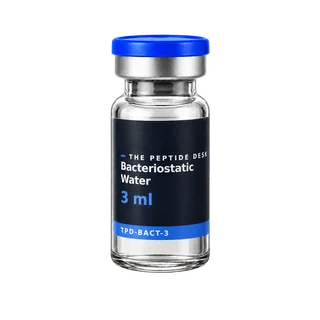
Water and supplies
Bacteriostatic water, U-100 insulin syringes, alcohol swabs.
Reconstitution
Use the peptide calculator. A 100mg vial with 3ml water gives roughly 33mg per ml. Just add the water to the vial and let it dissolve. Many also use AHK-Cu topically on the scalp.
Step by step
Dissolving the powder
Four steps, the same for every vial size.
- 1Wipe the cap
Clean the rubber stopper with an alcohol swab.
- 2Add BAC water
Just add it, it does not matter if it hits the powder directly.
- 3Swirl or shake
Until everything has dissolved, both are fine.
- 4Draw up
With the U-100 insulin syringe.
Dosing
Dosing
Dosing, titration and syringe
Loading the dosing information …
- Getting started and stepping up, drawn as a staircase
- Units on the U-100 syringe for every step
- How long one vial lasts
Injection
The injection is subcutaneous, into the fat layer under the skin. Common spots are the abdomen (keep about two finger-widths clear of the navel), the front and the inner side of the thigh, or the back of the upper arm.
The short version:
Injection
Where and at what angle
Pick a spot or switch the angle. Subcutaneous means: into the fat layer, not the muscle.
Rotate the spot each time, never the same one twice in a row.
Rule of thumb: where there is more fat under the skin, insert straight at 90 degrees. In lean people with little fat, 45 degrees, so the needle stays in the fat layer. Simplified diagram.
-
Clean the spot with an alcohol swab and let it dry
-
Pinch up a small fold of skin
-
Insert the needle: at 90 degrees where there is more fat under the skin, at 45 degrees in lean people with little fat
-
Inject slowly, wait a moment, then withdraw
-
Put the needle straight into the sharps container
Rotate the site each time so the tissue does not get irritated. Never the same spot twice in a row.
Alternatively AHK-Cu is used topically, in which case there is no injection.
What the research shows
An in vitro study (Pyo, 2007) showed that the AHK copper complex stimulated the growth of human hair follicles and the proliferation of dermal papilla cells. That is an interesting cell-level basis but not a clinical human study.
Research status
Where the research stands
ClinicalTrials.gov lists no trial of AHK-Cu alone. An early trial (early phase 1, from October 2026) tests a skin serum with five small peptides including AHK-Cu together with medicines and supplements. It is not counted here as a trial of its own. As of 26 Oct 2026. 4
On the skin
AHK-Cu is often applied directly to the scalp instead of being injected. The Pyo study treated hair follicles in the lab. There is no study yet in which AHK-Cu was applied to human skin or scalp. For the related GHK there is one: in a small placebo-controlled study men with pattern hair loss sprayed a solution of GHK and 5-aminolevulinic acid onto the scalp for six months. Hair count rose more than on placebo (Lee 2016).
Side effects
- Generally well tolerated, mainly local reactions at the application site.
- Solid human data are limited.
Storage
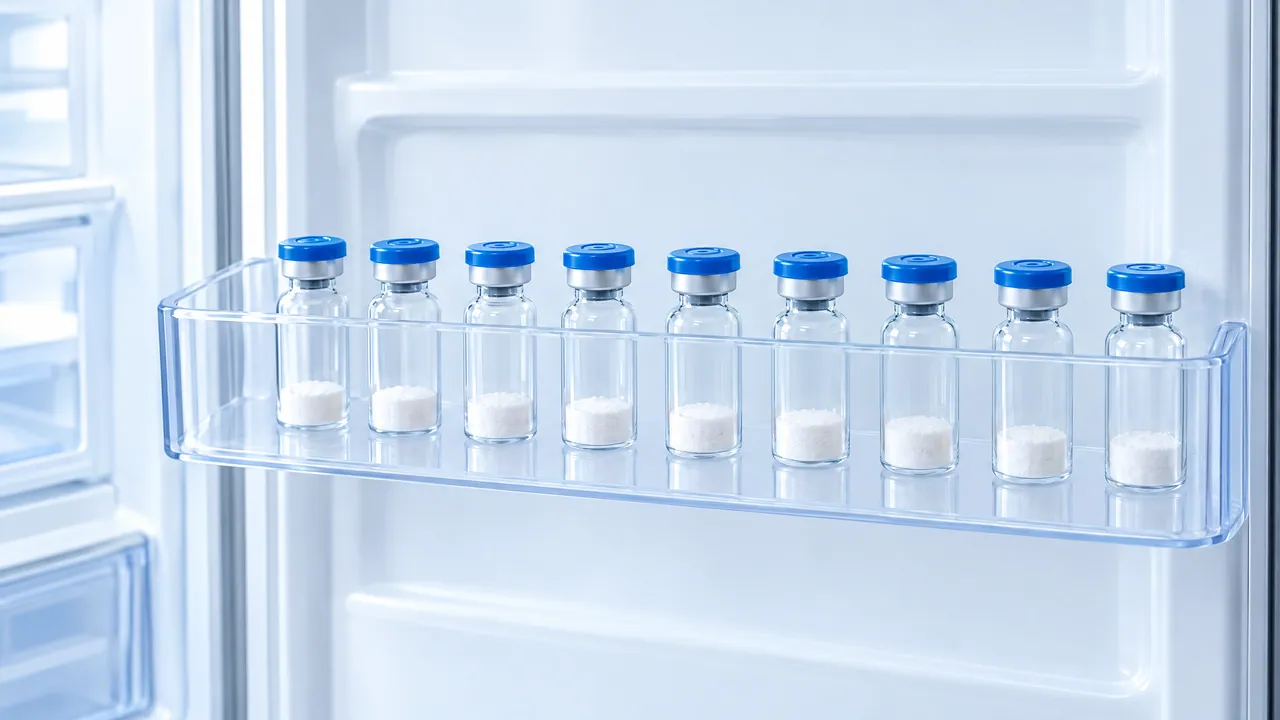
Before mixing the powder is robust, normal room temperature (around 20 to 25 degrees) is fine, ideally kept in the dark. After mixing, keep in the fridge (2 to 8 degrees), do not freeze. It stays good there for at least 4 to 6 months with barely any loss of potency, in practice considerably longer. Swirl or shake to mix, both are fine.
Shelf life
How long it keeps
Robust, no fridge needed. Best kept in the dark.
At least 4 to 6 months with barely any loss of potency. The bacteriostatic water brings a preservative. The blue colour comes from the copper.
- Keep it dark
- Dissolved: 2 to 8 degrees
- Note the mixing date on the vial