What is Masteron P?
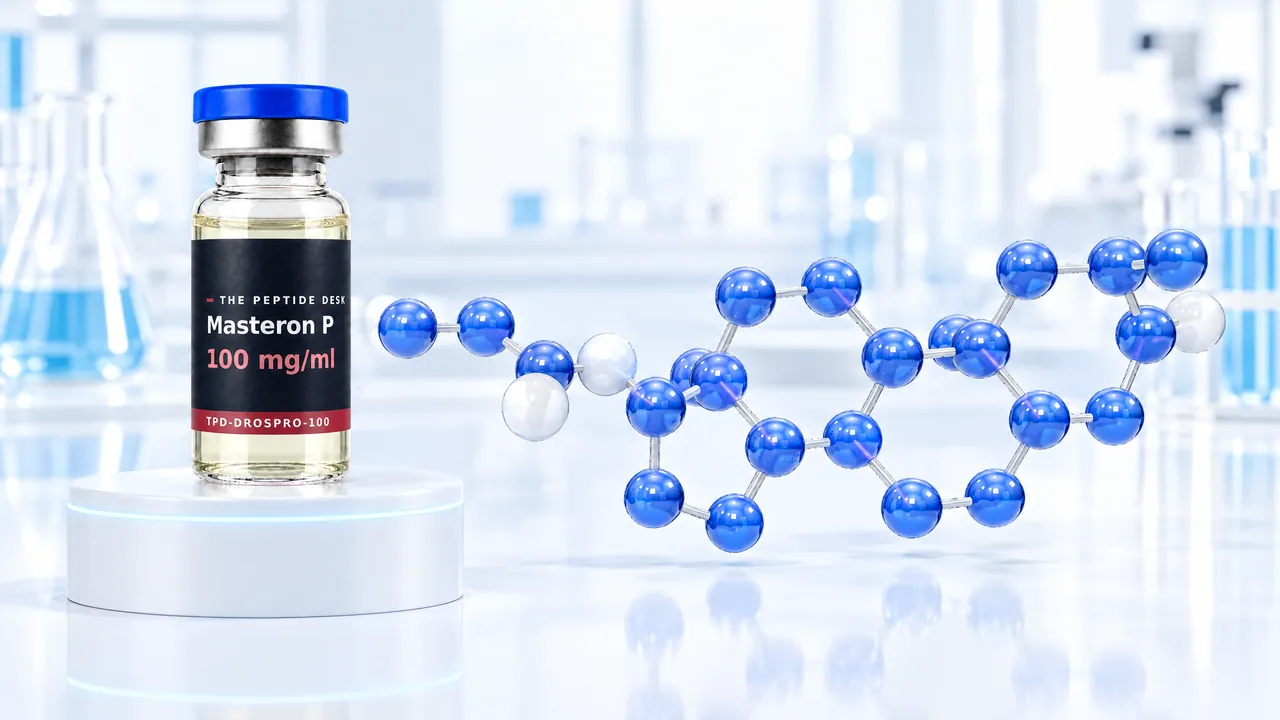
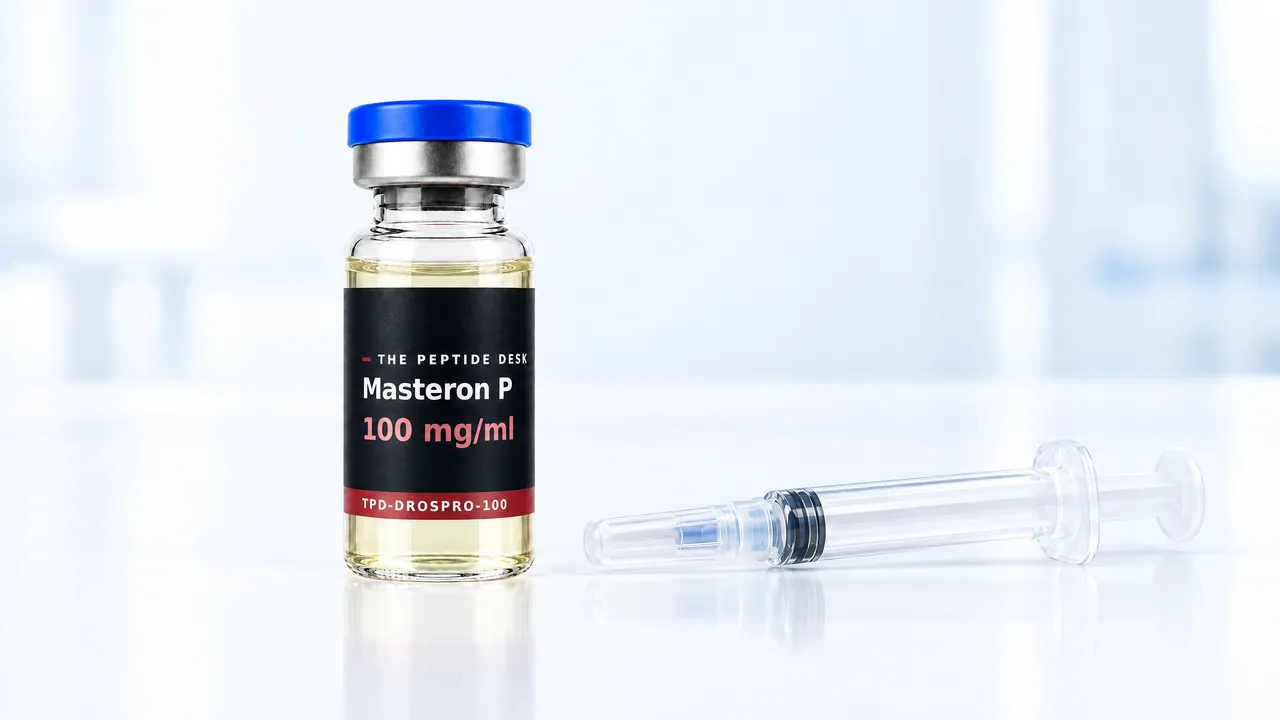
Masteron P (Drostanolone Propionate) is a DHT derivative with a short propionate ester. It is not primarily a mass-building steroid but popular for "hardening" in the cutting phase - it gives muscle a dry, defined look at low body fat. Historically drostanolone was even used for breast cancer because it acts anti-estrogenically.
This information is for research and educational purposes only. No medical advice.
Comparison
Drostanolone and relatives
The same compound with another ester and related DHT derivatives, as described in the TPD lexicon. Tap a card to open its entry.
How it works
As a DHT derivative masteron does not aromatize and even has a weakly anti-estrogenic effect (it competes at aromatase). That contributes to the "dry" look. The effect is mainly visible at already low body fat - at high body fat it does little visually.
Where it acts
Where drostanolone acts
Tap a point or a card. Red = androgen receptor, grey = observed or from reviews of the drug class.
- Skeletal muscle
Agonist at the androgen receptor, direct binding8
AR - Pituitary
Anabolic steroids suppress natural hormone production according to a review, sometimes for months6
Observed in trials - Blood lipids
Anabolic steroids lower HDL cholesterol according to a review6
Observed in trials - Skin
Acne is among the most often self-reported effects according to a review6
Observed in trials - Kidney and urine
Breakdown products detectable in urine for up to 24 days3
Observed in trials
Targets in the ChEMBL database8
Compound CHEMBL1201048: one recorded mechanism, agonist with direct binding to the human receptor.
- Gene
- AR
- UniProt
- P10275
- ChEMBL
- CHEMBL1871
- Action
- Agonist, direct binding
Use and dosing
Dosing
Dosing, titration and syringe
Loading the dosing information …
- Getting started and stepping up, drawn as a staircase
- Units on the U-100 syringe for every step
- How long one vial lasts
What the research shows
Drostanolone has historical clinical use as an anti-estrogenic agent in breast cancer. The general AAS pharmacology (Kicman 2008, Hartgens & Kuipers 2004) describes the DHT-derivative properties.
Study results
What the trials measured
Interactive: switch tabs, tap points, show or hide arms. Arms are named relative to each other, no dosing advice.
Regression in advanced breast cancer1
Share of the 91 patients with remission, average of three equally effective androgens
Testolactone, drostanolone and nandrolone were compared, with no difference in effect. Values for the single drugs are not in the abstract. Historical treatment, no longer standard today.
Growth inhibition of breast cancer cells2
Inhibition in percent, MCF-7 cell line, two days of exposure
The range spans three orders of magnitude in concentration. Combined with the chemotherapy drug 5-fluorouracil the effects added up. Lab experiment, not tested in humans.

Research status
Where the research stands
Drostanolone Propionate predates today's trial registries, the clinical papers date from the 1960s and 1970s. As of 25 Oct 2026. 9
- Preclinical Breast cancer cells in the lab
- Phase 1 no registered trial
- Phase 2 no registered trial
- Phase 3 no registered trial
- Approval in the USA, discontinued
The approval predates today's trial registries, so the register shows no current trial for this form. 9
Side effects
- Androgenic: as a DHT derivative - hair loss in predisposed individuals, acne.
- Lipids: can lower HDL.
- HPTA suppression: PCT topic.
- Barely any estrogen side effects, since no aromatization.
Storage
Store the oil solution at room temperature, protected from light - no fridge needed. Out of reach of children.