This information is for research and educational purposes only. No medical recommendations. Products are not approved for human use. For health questions, consult a doctor.

Lexicon

Losartan (Cozaar)

The sartan without the cough - and the only one that lowers uric acid on the side.

3 min read 11 sources

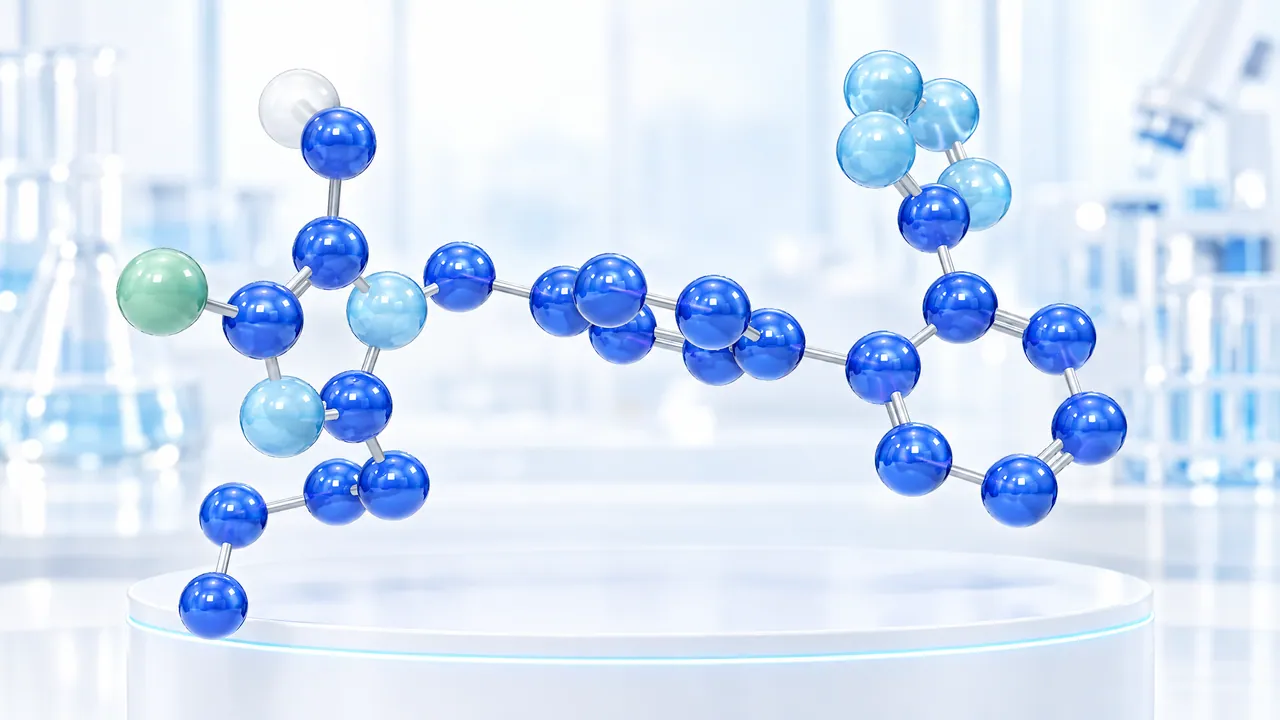
Large blue 3D molecule model with a green chlorine atom above a white podium in a bright lab
Compound approved · in the USA since 1995

Summary

At a glance

Sources checked on 26 Oct 2026

Strokes
-25 %

compared with atenolol at almost the same blood pressure reduction, 9,193 people (LIFE)1

End-stage kidney disease
-28 %

compared with placebo in type 2 diabetes with kidney damage (RENAAL)3

Stopped because of cough
0.3 %

with the ACE inhibitor captopril 2.7%, 3,152 people with heart failure4

Half-life of active metabolite
6-9 hours

losartan itself about 2 hours, according to the US label8

  • Losartan blocks the AT1 receptor through which angiotensin II narrows blood vessels. Its active metabolite is 10 to 40 times more potent by weight and stays in the blood longer with a half-life of 6 to 9 hours.98
  • In LIFE losartan lowered blood pressure as much as atenolol, yet there were 13 percent fewer cardiovascular events and 25 percent fewer strokes. In diabetes total mortality also fell.12
  • In RENAAL it protected the kidneys in type 2 diabetes: 16 percent fewer primary endpoint events and 28 percent less end-stage kidney disease.3
  • In heart failure losartan was not superior to the ACE inhibitor captopril but was better tolerated and hardly caused cough. It also inhibits the uric acid transporter URAT1.45
  • In the USA losartan has been approved as a prescription tablet since 1995. Everything here is the state of research, not a recommendation.7
Profile

Updated July 2026

Class
Angiotensin II receptor blocker

sartan, AT1 blocker

Use
Oral

once daily

Half-life
2 hours

losartan, 6 to 9 hours (active metabolite)

Distinctive
The only sartan that measurably lowers uric acid
Full effect
Only after 3 to 6 weeks
Contents 12 sections
  1. At a glance
  2. What is losartan?
  3. How it works
  4. Use and dosing
  5. What the research shows
  6. Research status
  7. Side effects
  8. Storage
  9. Related compounds
  10. FAQ
  11. Glossary
  12. Sources

What is losartan?

Losartan is an angiotensin II receptor blocker, a sartan for short. It blocks the same pathway as an ACE inhibitor but one step later: not the formation of angiotensin II, but its docking at the AT1 receptor. The result is similar, the route there is different.

That is exactly where the main practical difference comes from. Because ACE is left untouched, bradykinin is broken down normally. The dry cough of ACE inhibitors therefore does not appear. That is the most common reason someone switches from ramipril to a sartan.

This information is for research and educational purposes only. No medical advice.

Comparison

Blood pressure drugs in the lexicon

Compounds with different points of attack, as described in the TPD lexicon. Tap a card to open its entry.

Sartans block the AT1 receptor, ACE inhibitors already the formation of angiotensin II. In ELITE II losartan was not superior to the ACE inhibitor captopril in heart failure but better tolerated. 94

How it works

Losartan itself has only a short half-life of around two hours. The effect is carried by the active metabolite EXP3174, which binds about ten times more strongly and stays in circulation for six to nine hours. That is why one dose per day is enough despite the short half-life of the parent compound.

The uric acid effect is a genuine peculiarity and not a class effect: losartan inhibits the URAT1 transporter in the kidney, through which uric acid is reabsorbed. More is therefore excreted. Anyone dealing with gout or elevated uric acid alongside gets an added benefit that valsartan or telmisartan do not offer.

Where it acts

Where losartan acts

Tap a point or a card. Colour = target, grey = observed in studies.

  1. Blood vessels

    Blood pressure lowered by 30.2/16.6 mmHg on average in LIFE1

    AT1
  2. Kidney

    Inhibits URAT1, more uric acid is excreted and the level falls5

    URAT1
  3. Brain

    25% fewer strokes than with atenolol1

    Observed in trials
  4. Heart

    In diabetes with kidney damage 32% fewer first hospitalisations for heart failure3

    Observed in trials

Targets in the ChEMBL database9

Compound CHEMBL191: one recorded mechanism, Antagonist, direct binding.
Type-1 angiotensin II receptor
Gene
AGTR1
UniProt
P30556
ChEMBL
CHEMBL227
Action
Antagonist, direct binding
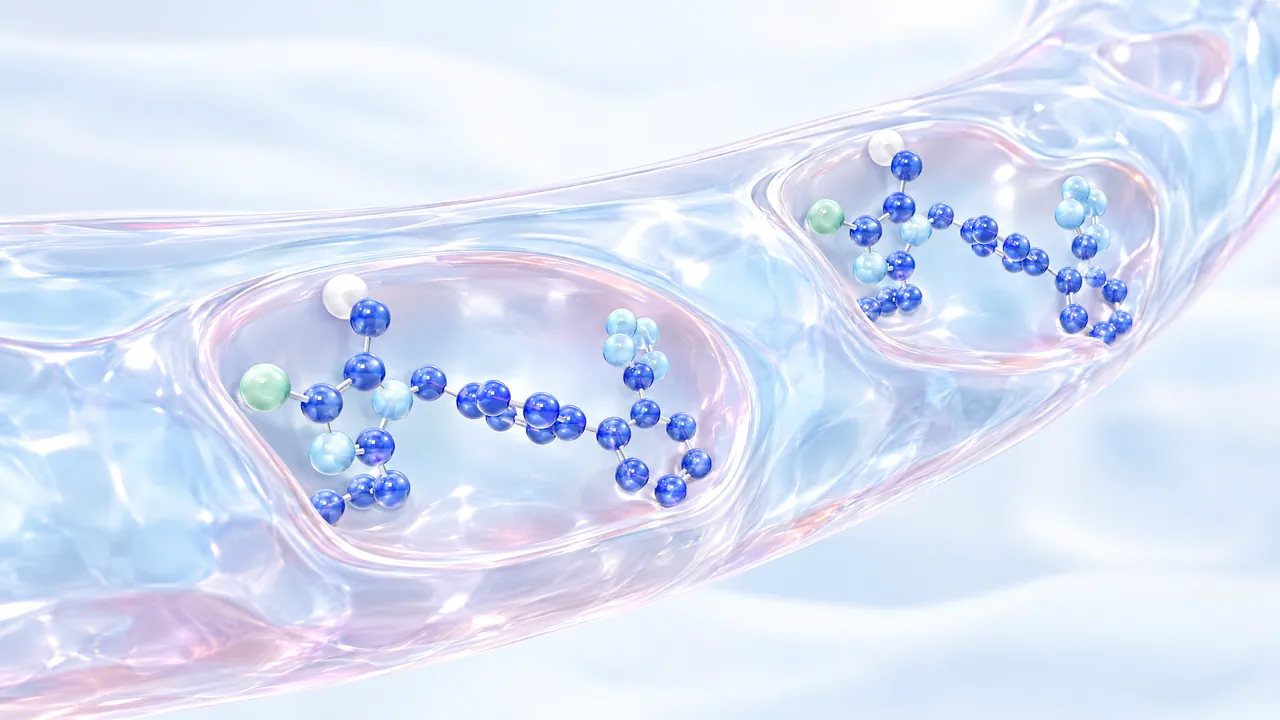
Transparent glass blood vessel with a pink wall, holding blue molecules with a green atom in two chambers
Losartan blocks the AT1 receptor in the vessel wall. Symbolic image.

Use and dosing

Dosing

Dosing, titration and syringe

Loading the dosing information …

  • Getting started and stepping up, drawn as a staircase
  • Units on the U-100 syringe for every step
  • How long one vial lasts
White folding box with the TPD logo next to a blister with ten white tablets, two loose tablets in front
Symbolic image.

What the research shows

LIFE (Lancet 2002) is the most informative trial, because it ran not against placebo but against an active comparator. Over 9,000 hypertensives with cardiac hypertrophy received losartan or atenolol. At practically identical blood pressure reduction, losartan produced 13 percent fewer cardiovascular events and around 25 percent fewer strokes. Same pressure, different outcome. That is a strong argument.

The diabetes subgroup (Lancet 2002) came out even more clearly, with an additional advantage in all-cause mortality. RENAAL (NEJM 2001) demonstrated kidney protection in diabetic nephropathy: the combined endpoint of doubling creatinine, end-stage renal failure and death fell by 16 percent.

ELITE II (Lancet 2000) belongs here for honesty: in heart failure, losartan was not superior to the ACE inhibitor captopril on mortality. It was better tolerated, it was not more effective. Sartans are therefore second choice in heart failure, for when an ACE inhibitor is not an option.

Study results

What the trials measured

Interactive: switch tabs, tap points, show or hide arms. Arms are named relative to each other, no dosing advice.

Losartan against atenolol in hypertension1

Change in risk with losartan, in percent, 9,193 people with a thickened heart muscle

Death, heart attack or stroke1
Losartan -13%
Stroke1
Losartan -25%
Cardiovascular death1 not significant
Losartan -11%
Heart attack1 not significant
Losartan +7%

Calculated from the relative risks in the abstract (0.87, 0.75, 0.89 and 1.07). Blood pressure fell almost equally in both groups. New-onset diabetes was less frequent with losartan.

People with diabetes in LIFE2

Change in risk compared with atenolol, in percent, 1,195 people

Death, heart attack or stroke2
Losartan -24%
Cardiovascular death2
Losartan -37%
Death from any cause2
Losartan -39%

Calculated from the relative risks in the abstract (0.76, 0.63 and 0.61). Prespecified analysis of the subgroup with diabetes, mean follow-up 4.7 years.

Losartan against placebo in diabetic kidney disease3

Risk reduction in percent, 1,513 people, 3.4 years on average

Primary endpoint3 Doubled creatinine, kidney failure or death
Losartan -16%
Doubled creatinine3
Losartan -25%
End-stage kidney disease3
Losartan -28%
First hospitalisation for heart failure3
Losartan -32%
Protein in urine3 Decline of the level
Losartan -35%

In addition to usual blood pressure treatment. Losartan had no effect on mortality. The benefit exceeded what blood pressure lowering alone explains.

Losartan against captopril in heart failure4

3,152 people aged 60 and over, rate per year in percent

Mortality4
Losartan 11.7%
Captopril (ACE inhibitor) 10.4%
Sudden death or resuscitated arrest4
Losartan 9.0%
Captopril (ACE inhibitor) 7.3%

No significant difference: losartan was not superior to captopril but was better tolerated (see tolerability).
Model of a blood vessel with a pink wall and fine veins on a glass shelf in an incubator between petri dishes
Large studies on heart, brain and kidney. Symbolic image.

Research status

Where the research stands

Losartan has been approved since 1995 and the registry lists about 450 trials with it. Here is a selection of large and newer trials of losartan itself. As of 26 Oct 2026. 10

  1. Preclinical Blockade of the AT1 receptor
  2. Phase 1 no registered trial
  3. Phase 2 2 trials, 2 completed
  4. Phase 3 5 trials, 4 completed, 1 stopped early
  5. Approval in the USA since 1995
5,650 participants in phase 3 Approved: in the USA losartan has been marketed as a prescription tablet since 1995 (Drugs@FDA), among other uses for hypertension, to lower stroke risk with a thickened heart muscle and for kidney damage from type 2 diabetes.7
Show all 8 phase 2, 3 and 4 trials on a timelineHide timeline 7 completed 0 running 1 stopped early 2 with results
Phase 2
Phase 3
Phase 4

Bar: start to primary endpoint (planned for running trials). Green = completed, blue = progress until 26 Oct 2026, grey = stopped early.

Side effects

  • Clearly fewer than with ACE inhibitors: in the trials the discontinuation rate sat at placebo level. That is the main advantage of the class.
  • Raised potassium: especially combined with potassium-sparing agents.
  • Dizziness: mostly at the start or when increasing too fast.
  • Angioedema: very rare, but described with sartans too. Anyone who had it on an ACE inhibitor is not automatically safe here.
  • Kidney values: check after starting, as with ACE inhibitors.

Tolerability

Tolerability compared with an ACE inhibitor

Out of 100 participants per group, how many had the event over a median of 555 days.

10 of 100 Losartan
15 of 100 Captopril (ACE inhibitor)
Event LosartanCaptopril (ACE inhibitor)
Stopped because of side effects4 10%15%
Of these because of cough4 0%3%

Counted without those who died. The dry cough of ACE inhibitors hardly occurred with losartan. In LIFE losartan was better tolerated than atenolol.41

Storage

Store dry, at room temperature and protected from light. Keep out of reach of children.
Three white tablet bottles and a folded light blue towel on a white shelf
Dry, at room temperature and protected from light. Symbolic image.

Related

Related compounds

Same targets or a different path: all in the TPD lexicon.

FAQ

Common questions about Losartan (Cozaar)

Short answers, each backed by the sources below.

Is losartan approved?

Yes. In the USA it has been approved as a prescription tablet since 14 April 1995. The label lists hypertension, lowering stroke risk with a thickened heart muscle and kidney damage from type 2 diabetes.78

How does losartan work?

It blocks the AT1 receptor through which angiotensin II narrows the vessels and raises blood pressure. Losartan itself has a half-life of about 2 hours, its active metabolite of 6 to 9 hours. By weight the metabolite is 10 to 40 times more potent than losartan.98

What did the LIFE study show?

9,193 people with hypertension and a thickened heart muscle received losartan or atenolol for at least 4 years. Blood pressure fell almost equally, yet with losartan there were 13 percent fewer cases of death, heart attack or stroke and 25 percent fewer strokes. In the subgroup with diabetes death from any cause fell by 39 percent.12

What is known about the kidney?

In RENAAL with 1,513 people with type 2 diabetes and kidney damage losartan lowered the risk of doubled creatinine, kidney failure or death by 16 percent and of end-stage kidney disease by 28 percent. Protein in the urine fell by 35 percent. It had no effect on mortality.3

What about uric acid?

Losartan inhibits the transporter URAT1 in the kidney through which uric acid is taken back up. In one study losartan lowered uric acid and raised its excretion while candesartan did not. An analysis of six randomised trials with about 2,200 people shows a small but consistent reduction compared with placebo.56

Is losartan better than an ACE inhibitor in heart failure?

No. In ELITE II with 3,152 people aged 60 and over mortality was 11.7 percent per year with losartan and 10.4 percent with captopril, without a significant difference. 9.7 against 14.7 percent stopped because of side effects, 0.3 against 2.7 percent because of cough.4

Glossary

Terms explained briefly

Dotted words in the text open these explanations directly.

ACE inhibitor
Drug group that slows the formation of angiotensin II. A typical side effect is dry cough.
Active metabolite
Breakdown product that is itself active. For losartan it is called EXP3174.
Angiotensin II
The body's own hormone that narrows vessels, retains salt and water and so raises blood pressure.
AT1 receptor
Receptor through which angiotensin II triggers most of its effects on vessels, heart and kidney.
Bradykinin
Messenger broken down by the enzyme ACE. If it builds up under ACE inhibitors, cough can occur.
Cardiac hypertrophy
Thickening of the heart muscle, often from long-standing hypertension. It raises the risk for heart and brain.
Diabetic nephropathy
Kidney damage from diabetes, recognisable by protein in the urine and rising creatinine.
Potassium
Mineral in the blood, important for heart rhythm and muscles. Sartans and ACE inhibitors can raise it.
Sartan
Angiotensin II receptor blocker: drug group that blocks the AT1 receptor. Names end in -sartan.
URAT1
Transporter in the kidney that takes uric acid from the urine back into the blood.

Evidence

Sources

Show all 11 sourcesHide sources 6 Studies1 Trial registry4 Database checked 26 Oct 2026

Studies

  1. LIFE: losartan against atenolol in hypertension with a thickened heart muscle

    Dahlöf et al., The Lancet, 2002

    Checked 26 Oct 2026 via doi.org, Crossref, PubMed
  2. LIFE: subgroup with diabetes

    Lindholm et al., The Lancet, 2002

    Checked 26 Oct 2026 via doi.org, Crossref, PubMed
  3. RENAAL: losartan in type 2 diabetes with kidney damage

    Brenner et al., New England Journal of Medicine, 2001

    Checked 26 Oct 2026 via doi.org, Crossref, PubMed
  4. ELITE II: losartan against captopril in heart failure

    Pitt et al., The Lancet, 2000

    Checked 26 Oct 2026 via doi.org, Crossref, PubMed
  5. Losartan inhibits URAT1 and lowers uric acid

    Hamada et al., American Journal of Hypertension, 2008

    Checked 26 Oct 2026 via doi.org, Crossref, PubMed
  6. Uric acid lowering by losartan: analysis of randomised trials

    Xu et al., Hypertension Research, 2026

    Checked 26 Oct 2026 via doi.org, Crossref, PubMed

Trial registry

  1. Trials on ClinicalTrials.gov

    ClinicalTrials.gov, U.S. National Library of Medicine

    Checked 26 Oct 2026 via ClinicalTrials.gov API v2

Database

  1. US approval (NDA 020386), prescription

    Drugs@FDA, U.S. Food and Drug Administration

    Checked 26 Oct 2026 via openFDA-API
  2. US label for losartan (indications, pharmacokinetics)

    DailyMed, U.S. National Library of Medicine

    Checked 26 Oct 2026 via openFDA-API, DailyMed
  3. Mechanism and approval in ChEMBL

    ChEMBL, EMBL-EBI (CHEMBL191)

    Checked 26 Oct 2026 via ChEMBL
  4. Structure of losartan in PubChem

    PubChem, U.S. National Library of Medicine (CID 3961)

    Checked 26 Oct 2026 via PubChem