What is Methyltestosterone?
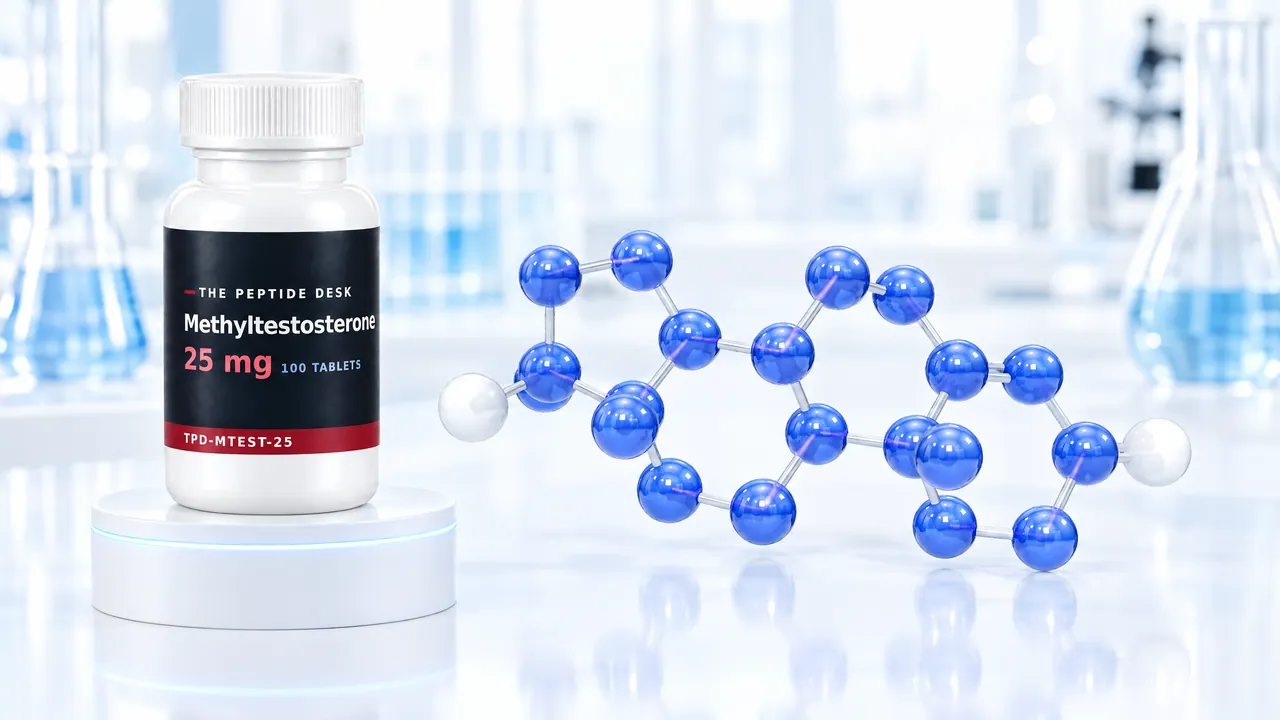
Methyltestosterone is testosterone with an extra methyl group at position 17-alpha. This small change protects the molecule from rapid breakdown in the liver, which is why it works as a tablet. It is one of the oldest oral androgens and was used clinically for testosterone deficiency and, at low doses together with estrogens, in postmenopausal women.
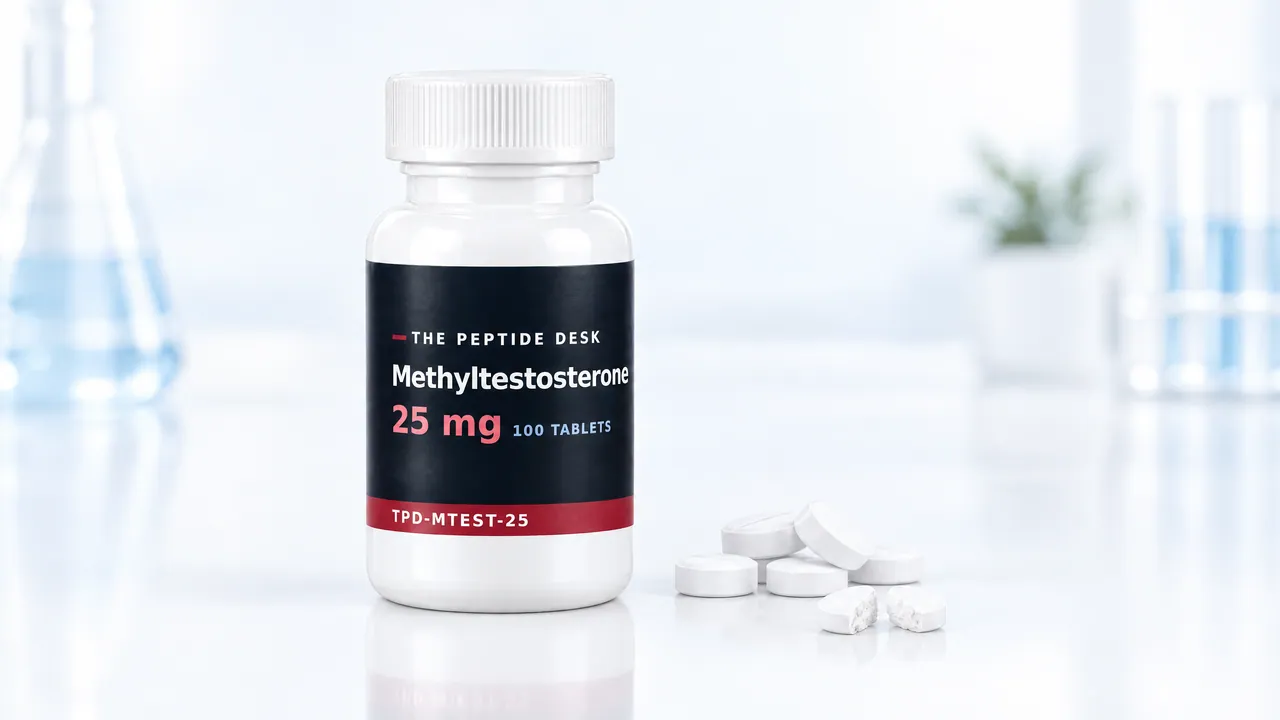
Today it plays almost no role in medicine because 17-alpha-alkylation strains the liver. Here it comes as a 25mg tablet, 100 per bottle.
This information is for research and educational purposes only. No medical advice.
Comparison
Androgens as tablets
All of these carry an alkyl group at position 17-alpha and act on the androgen receptor, as stated in the TPD lexicon. Tap a card to open its entry.
The 17-alpha alkylation is what makes the tablet work and at the same time the reason for the liver strain. 13
How it works
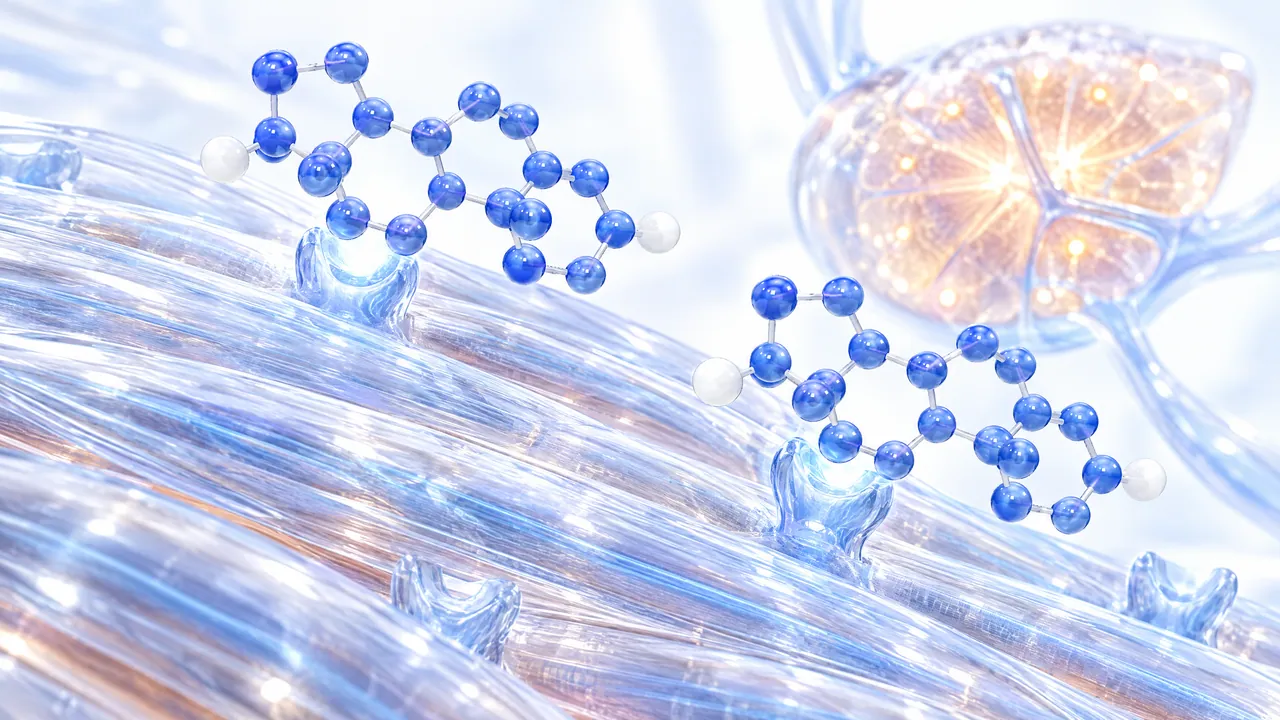
Like testosterone, methyltestosterone binds the androgen receptor and raises protein synthesis, nitrogen retention and red blood cell production. On top come the typical androgenic effects on libido, skin and hair.
Part of it is converted by aromatase to 17-alpha-methylestradiol, a strong and long-acting estrogen. That is why water retention and gyno are an issue despite the tablet form. In the Lobo study it also lowered SHBG, leaving more free testosterone in the blood.
Where it acts
One receptor, several organs
Tap a point or a card. Grey = effect seen in trials.
- Liver
Cholestasis, hyperplasia and tumours after long use8
Observed in trials - Blood
SHBG fell sharply, free testosterone rose2
Observed in trials - Glucose uptake in tissue
About a third less glucose taken up under insulin5
Observed in trials - Abdominal fat
More visceral fat than without the androgen4
Observed in trials - Brain
Messengers in spinal fluid changed, more drive and less sleep6
Observed in trials
Targets in the ChEMBL database15
Compound CHEMBL1395: one recorded mechanism, agonist with direct binding to the human receptor.
- Gene
- AR
- UniProt
- P10275
- ChEMBL
- CHEMBL1871
- Action
- Agonist, direct binding
Use and dosing
Dosing
Dosing, titration and syringe
Loading the dosing information …
- Getting started and stepping up, drawn as a staircase
- Units on the U-100 syringe for every step
- How long one vial lasts
What the research shows
Most controlled data come from low doses in women. Lobo and colleagues (Fertil Steril, 2003) gave postmenopausal women estrogens with or without 1.25mg methyltestosterone daily: with the addition, free testosterone rose, SHBG fell and sexual interest increased more.
Diamond and colleagues (JCEM, 1998) showed that just 5mg three times daily for 10 to 12 days measurably lowers insulin sensitivity in women. On the liver there are case reports: Borhan-Manesh (1989) described cholestatic jaundice after six months of 20 to 40mg daily, while Lowdell and Murray-Lyon (BMJ, 1985) reported liver damage reversing after a switch to non-alkylated androgens. Kicman (2008) summarizes the pharmacology.
Study results
What the trials measured
Interactive: switch tabs, tap points, show or hide arms. Arms are named relative to each other, no dosing advice.
Apolipoprotein C-III with added methyltestosterone3
Change against estrogens alone, per lipoprotein class
Less apolipoprotein C-III lowers triglycerides. At the same time HDL cholesterol fell, in a second study only in the methyltestosterone group.
Glucose uptake under insulin5
Healthy women, 10 to 12 days, clamp measurement, glucose per kg body weight and minute
Insulin release stayed almost the same, yet less glucose was taken up. The authors read this as insulin resistance caused by androgens.
Complement protein C4 in the blood7
Four patients, double-blind alternating with placebo, mean in micrograms per ml
On placebo there were 19 swelling attacks in 11.8 months, on methyltestosterone 4 in a total of 46 months. Very small study from 1977.

Research status
Where the research stands
Methyltestosterone has been in use for decades. The registry holds only six trials, four of them on the combination with estrogens in postmenopausal women. As of 26 Oct 2026. 14
- Preclinical 17-alpha methylation protects against breakdown in the liver
- Phase 1 2 trials, 1 completed, 1 stopped early
- Phase 2 4 trials, 2 completed, 2 stopped early
- Phase 3 no registered trial
- Approval since 1973
Show all 4 phase 2 trials on a timelineHide timeline
NCT00141570 · 350 participants, started Jun 2004, primary endpoint reached Jun 2007. Tests several agents.
Registry entry ↗ · Results not yet in PubMed
NCT00141557 · 133 participants, started Jul 2004, stopped early Apr 2007. Tests several agents.
NCT00141544 · 28 participants, started Jul 2004, stopped early Apr 2007. Tests several agents.
NCT00160342 · 1,251 participants (planned), started Jun 2005, primary endpoint reached Sept 2007. Tests several agents.
Registry entry ↗ · Results not yet in PubMed
Bar: start to primary endpoint (planned for running trials). Green = completed, blue = progress until 26 Oct 2026, grey = stopped early. Phase 1: 2 trials on safety and pharmacokinetics, not shown as bars.
Side effects
The main risk is the liver. The 17-alpha-alkylation that makes the tablet work in the first place strains it and can cause bile stasis.
- Liver: bile stasis and jaundice, in case reports also liver tumors after long use.
- Estrogen: water retention, gyno risk from the potent methylestradiol.
- Metabolism: falling insulin sensitivity, lower HDL.
- HPTA suppression: your own testosterone production is suppressed.
- Androgenic: acne, hair loss if predisposed, virilization in women.
Warning signs such as yellow skin or eyes, dark urine, pale stools or itching mean: stop at once and get it checked by a doctor.
Storage
Keep the tablets dry, at room temperature and protected from light. Close the bottle tightly after each use so no moisture gets in. Keep out of reach of children.