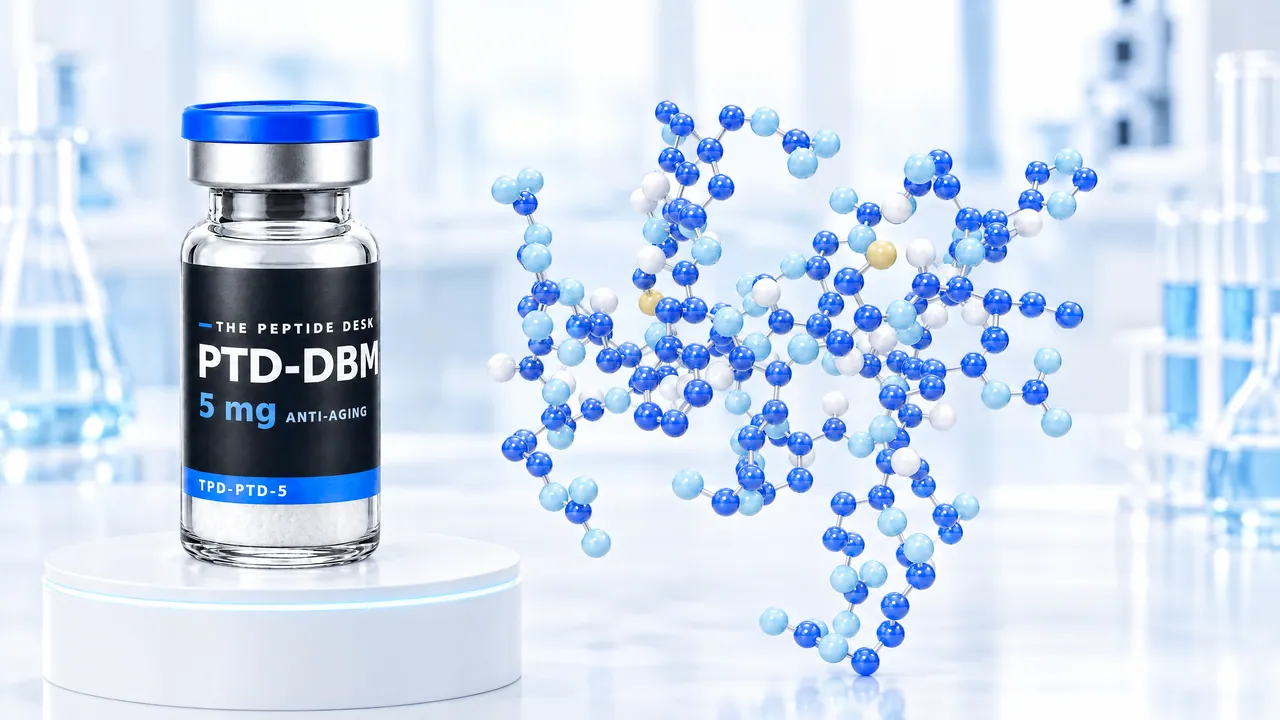
What is PTD-DBM?
PTD-DBM is a peptide from hair research. It engages the Wnt signaling route, important for the activation of hair follicles. Unlike most other entries here, PTD-DBM is usually applied topically to the scalp, often combined with microneedling.
Comparison
Substances related to hair
PTD-DBM next to other entries in the TPD lexicon related to hair. Tap a card to open its entry.
Simplified: the approaches are fundamentally different and not directly comparable. For PTD-DBM there are only animal data. 1
How it works
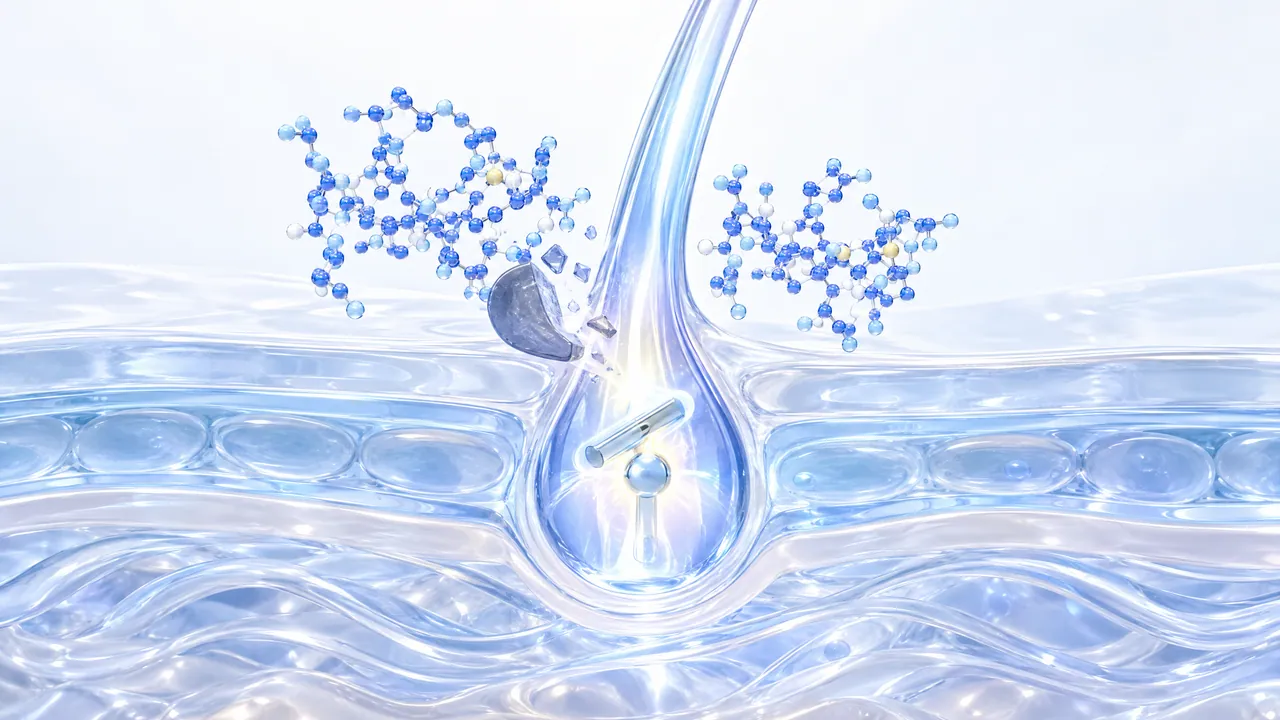
A protein called CXXC5 normally brakes the Wnt route by binding the protein Dishevelled. PTD-DBM displaces CXXC5 from this binding, so the Wnt route becomes more active again. That promotes the activation of hair follicles. In animal models even the formation of new follicles in wounds was described.
Where it acts
Where PTD-DBM acted in experiments
Tap a point or a card. Colour = target. All from cell and animal studies.
- Skin and hair follicles
Hair grew back faster, new follicles in wounds (mice)1
CXXC5
Known targets2
Compound PTD-DBM (nicht in PubChem oder ChEMBL): two described targets, type of action on each card.
- Gene
- CXXC5
- UniProt
- Q7LFL8
- ChEMBL
- CHEMBL5169170
- Action
- Displaced from Dishevelled (competition for the binding site)
- Gene
- DVL1
- UniProt
- O14640
- ChEMBL
- CHEMBL6027
- Action
- Binding site where PTD-DBM docks instead of CXXC5
Use
Dosing
Dosing
Dosing, titration and syringe
Loading the dosing information …
- Getting started and stepping up, drawn as a staircase
- Units on the U-100 syringe for every step
- How long one vial lasts
What the research shows
A study (Lee, Choi, 2017) showed that PTD-DBM stimulated hair growth in mice via inhibition of CXXC5 and even promoted the formation of new hair follicles in wounds. That is a clean preclinical basis but animal and cell research, no controlled human studies.
Study results
What the trials measured
Interactive: switch tabs, tap points, show or hide arms. Arms are named relative to each other, no dosing advice.
Closed wound area after 3 days2
Share of the wound newly covered with skin in percent, backs of mice
Values from the full text. Only the combination is shown, the one for which the text gives a number. According to the text, PTD-DBM alone sped up healing about as much as the growth factor EGF. Animal model, no statement about humans.
Research status
Where the research stands
From cell cultures to mouse models: what has been published on PTD-DBM. There is no registered human trial. As of 26 Oct 2026. 5
- Preclinical Cell cultures, human scalp samples and mouse models
- Phase 1 no registered trial
- Phase 2 no registered trial
- Phase 3 no registered trial
- Approval not yet
So far there is no registered trial in humans. 5
Side effects
- Topically generally well tolerated, occasionally mild scalp irritation.
- Solid human data are limited.
Storage
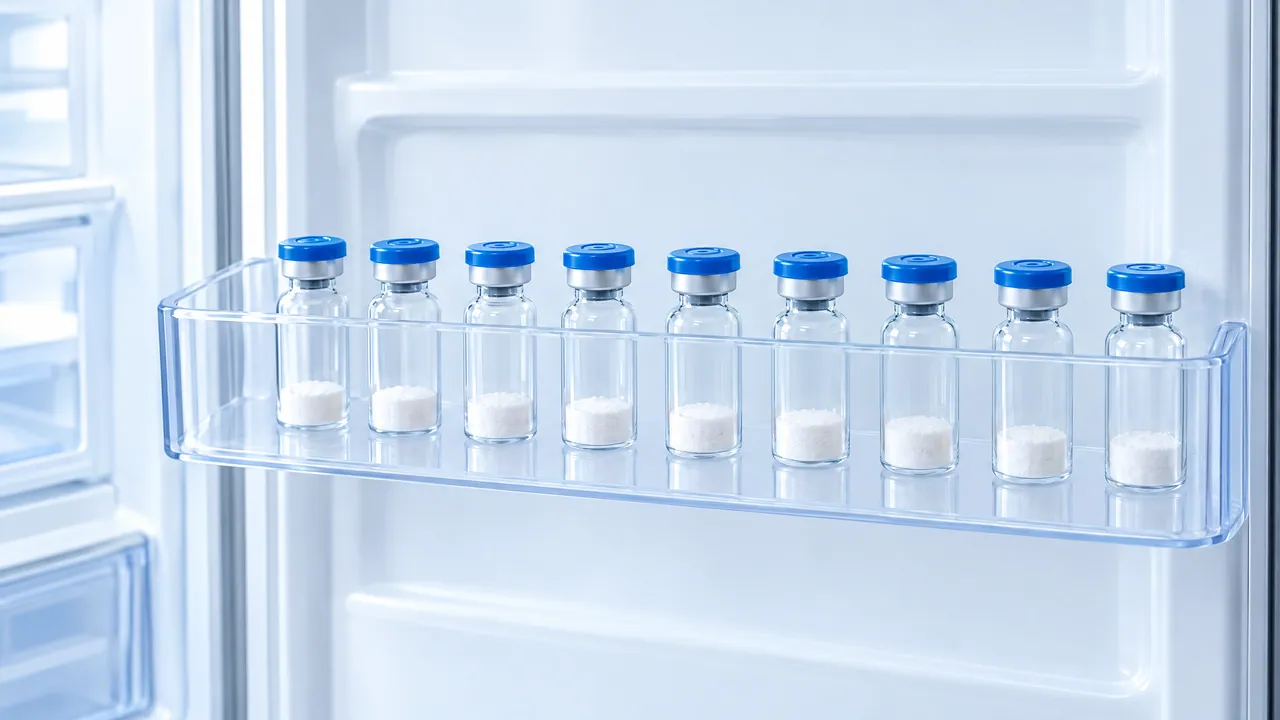
Before mixing the powder is robust, normal room temperature (around 20 to 25 degrees) is fine, ideally kept in the dark. After mixing, keep in the fridge (2 to 8 degrees), do not freeze. It stays good there for at least 4 to 6 months with barely any loss of potency, in practice considerably longer. Swirl or shake to mix, both are fine.
Shelf life
How long it keeps
Robust, no fridge needed. Keeps for several months without trouble.
At least 4 to 6 months with barely any loss of potency.
- Keep it dark
- Dissolved: 2 to 8 degrees
- Note the mixing date on the vial