

Scegli la tua etichetta
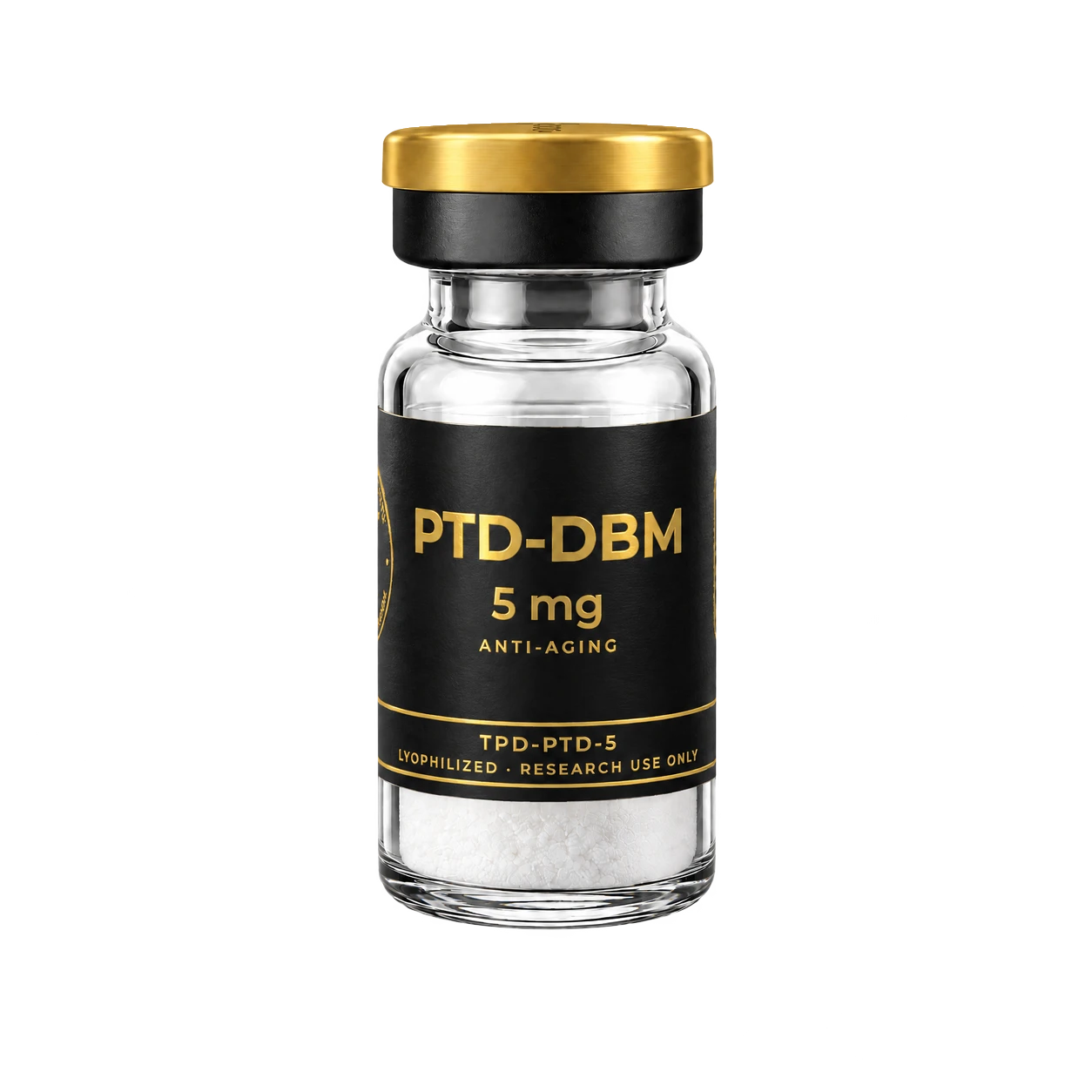
mostrata direttamente sul flaconcinoPTD-DBM
Hair & Skin
- Spedito dalla Germania
Ordine
- DHL con tracciamento
- Imballaggio discreto
In sintesi
PTD-DBM in cifre
I dati chiave dalla nostra enciclopedia.
Voce completa dell'enciclopedia- Class
- Wnt-activating peptideCXXC5 disruptor
- Use
- Topical on the scalp
- Sizes
- 5 mg1 size in the shop
What studies show
The source in the lexicon- Lee, Choi et al., Journal of Investigative Dermatology, 2017
Non esiste ancora un'analisi di laboratorio per PTD-DBM. Vota a favoreFallo testare tu, noi paghiamo la metàTutte le analisi di laboratorio
Conoscenze
Tutto su PTD-DBM
Informazioni dettagliate in arrivo.
Dosaggio
Caricamento informazioni sul dosaggio …
Utili da avere
Cosa ti serve insieme
L'acqua batteriostatica viene aggiunta automaticamente al carrello. Siringhe e tamponi con un clic.

Siringhe da insulina
10 pz · 5.50 €

Tamponi imbevuti di alcol
50 pz · 10 €
Quanta acqua?
Unità sulla siringa per la misura del tuo flaconcino.
Apri il calcolatore →Is PTD-DBM approved or studied in humans?
No. There is no approval and as of 26 October 2026 no trial with PTD-DBM in the registry ClinicalTrials.gov. The published papers are cell cultures, scalp samples and mouse models.
How is PTD-DBM supposed to work?
CXXC5 is a natural brake of the Wnt signalling pathway: it binds Dishevelled and so dampens the signal. PTD-DBM carries exactly the binding piece of CXXC5 and occupies the spot. CXXC5 can no longer brake and beta-catenin rises.
What do the hair studies show?
Bald areas of human scalp contained more CXXC5. In mice PTD-DBM made hair grow back faster and new hair follicles form in wounds. Hair loss caused by the hormone PGD2 could also be reversed with it in mice.
What do the wound studies show?
On skin wounds in mice PTD-DBM sped up healing about as much as the growth factor EGF. Together with valproic acid the wounds were 42.8 percent newly covered with skin after 3 days, untreated 4.9 percent.
Why is it applied to the skin?
In the mouse studies PTD-DBM was applied to the depilated skin or directly onto the wound. The transport sequence is meant to help it get into cells. How much reaches the scalp in humans has not been studied.
Which side effects are known?
There are no solid human data. The entry mentions occasional mild scalp irritation, there is no study on it.
Correlati
Prodotti correlati

Snap-8
Peptidi · Cognizione e sonno Cognizione e sonno
1 misura
= 11.6 €/fiala

Healthy Hair Skin Nails Blend
Peptidi · Specialità e supporto Specialità e supporto
1 misura
per barattolo

Finasteride
Farmaci · Ormoni e urologia Ormoni e urologia
3 misure

Dutasteride
Farmaci · Ormoni e urologia Ormoni e urologia
1 misura
Testato in laboratorio

PTD-DBM

