

Pasirinkite etiketę
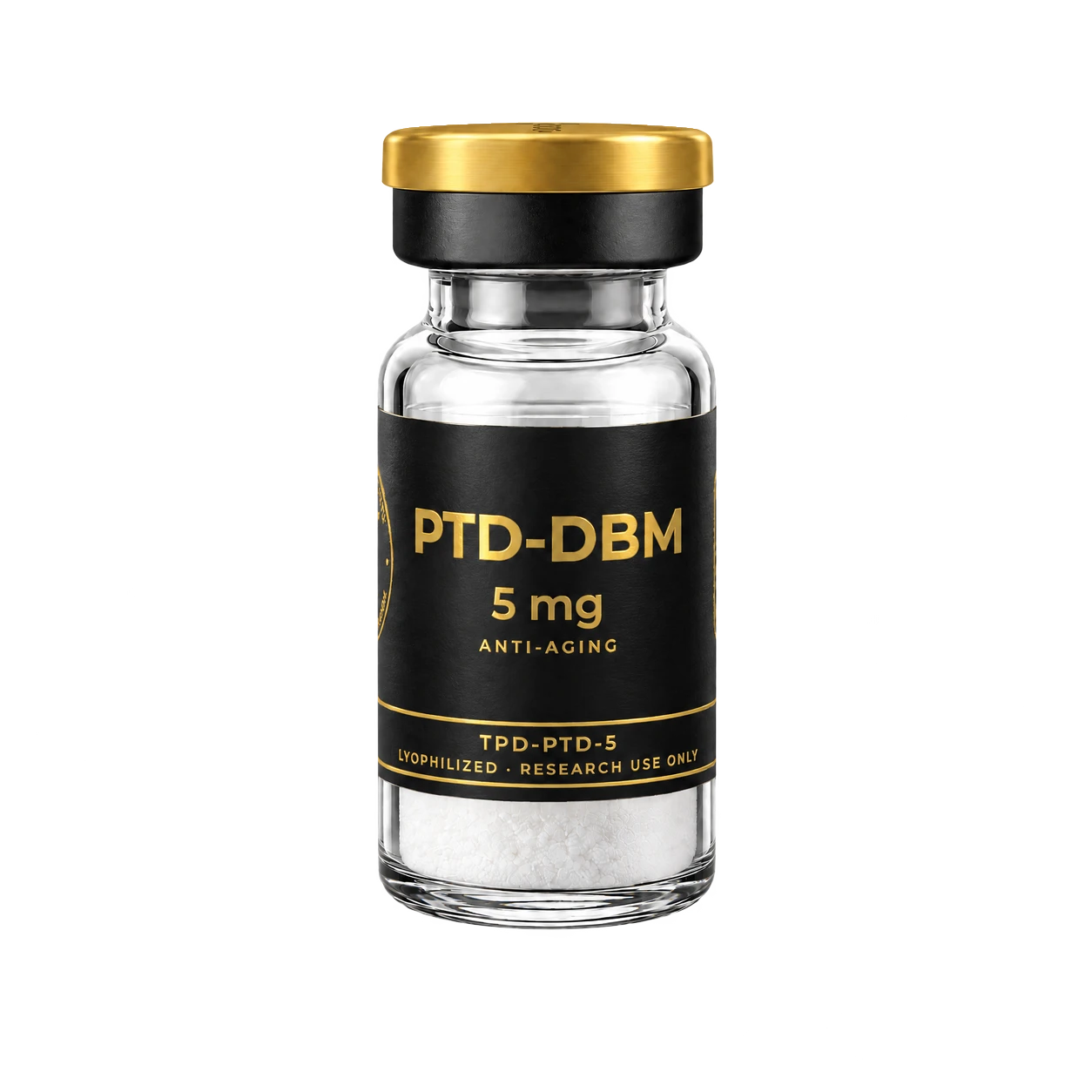
rodoma tiesiai ant flakonoPTD-DBM
Hair & Skin
- Siunčiame iš Vokietijos
Užsakymas
- DHL su sekimu
- Diskreti pakuotė
Trumpai
PTD-DBM skaičiais
Pagrindiniai rodikliai iš mūsų žinyno.
Visas žinyno įrašas- Class
- Wnt-activating peptideCXXC5 disruptor
- Use
- Topical on the scalp
- Sizes
- 5 mg1 size in the shop
What studies show
The source in the lexicon- Lee, Choi et al., Journal of Investigative Dermatology, 2017
Produktui PTD-DBM laboratorinės analizės dar nėra. Balsuoti už taiUžsakykite tyrimą, mes apmokame pusęVisos laboratorinės analizės
Žinios
Viskas apie PTD-DBM
Išsami informacija netrukus.
Dozavimas
Įkeliama dozavimo informacija …
Pravers
Ko dar jums reikės
Bakteriostatinis vanduo į krepšelį pridedamas automatiškai. Švirkštai ir servetėlės - vienu paspaudimu.

Insulino švirkštai
10 vnt. · 5.50 €

Spiritinės servetėlės
50 vnt. · 10 €
Kiek vandens?
Vienetai ant švirkšto jūsų flakono dydžiui.
Atidaryti skaičiuoklę →Is PTD-DBM approved or studied in humans?
No. There is no approval and as of 26 October 2026 no trial with PTD-DBM in the registry ClinicalTrials.gov. The published papers are cell cultures, scalp samples and mouse models.
How is PTD-DBM supposed to work?
CXXC5 is a natural brake of the Wnt signalling pathway: it binds Dishevelled and so dampens the signal. PTD-DBM carries exactly the binding piece of CXXC5 and occupies the spot. CXXC5 can no longer brake and beta-catenin rises.
What do the hair studies show?
Bald areas of human scalp contained more CXXC5. In mice PTD-DBM made hair grow back faster and new hair follicles form in wounds. Hair loss caused by the hormone PGD2 could also be reversed with it in mice.
What do the wound studies show?
On skin wounds in mice PTD-DBM sped up healing about as much as the growth factor EGF. Together with valproic acid the wounds were 42.8 percent newly covered with skin after 3 days, untreated 4.9 percent.
Why is it applied to the skin?
In the mouse studies PTD-DBM was applied to the depilated skin or directly onto the wound. The transport sequence is meant to help it get into cells. How much reaches the scalp in humans has not been studied.
Which side effects are known?
There are no solid human data. The entry mentions occasional mild scalp irritation, there is no study on it.
Susiję
Susiję produktai

Snap-8
Peptidai · Pažinimas ir miegas Pažinimas ir miegas
1 dydis
= 11.6 €/flakonas

Healthy Hair Skin Nails Blend
Peptidai · Specialūs produktai ir palaikymas Specialūs produktai ir palaikymas
1 dydis
už buteliuką

Finasteride
Vaistai · Hormonai ir urologija Hormonai ir urologija
Dydžių: 3

Dutasteride
Vaistai · Hormonai ir urologija Hormonai ir urologija
1 dydis
Patikrinta laboratorijoje

PTD-DBM

