

Izvēlieties etiķeti
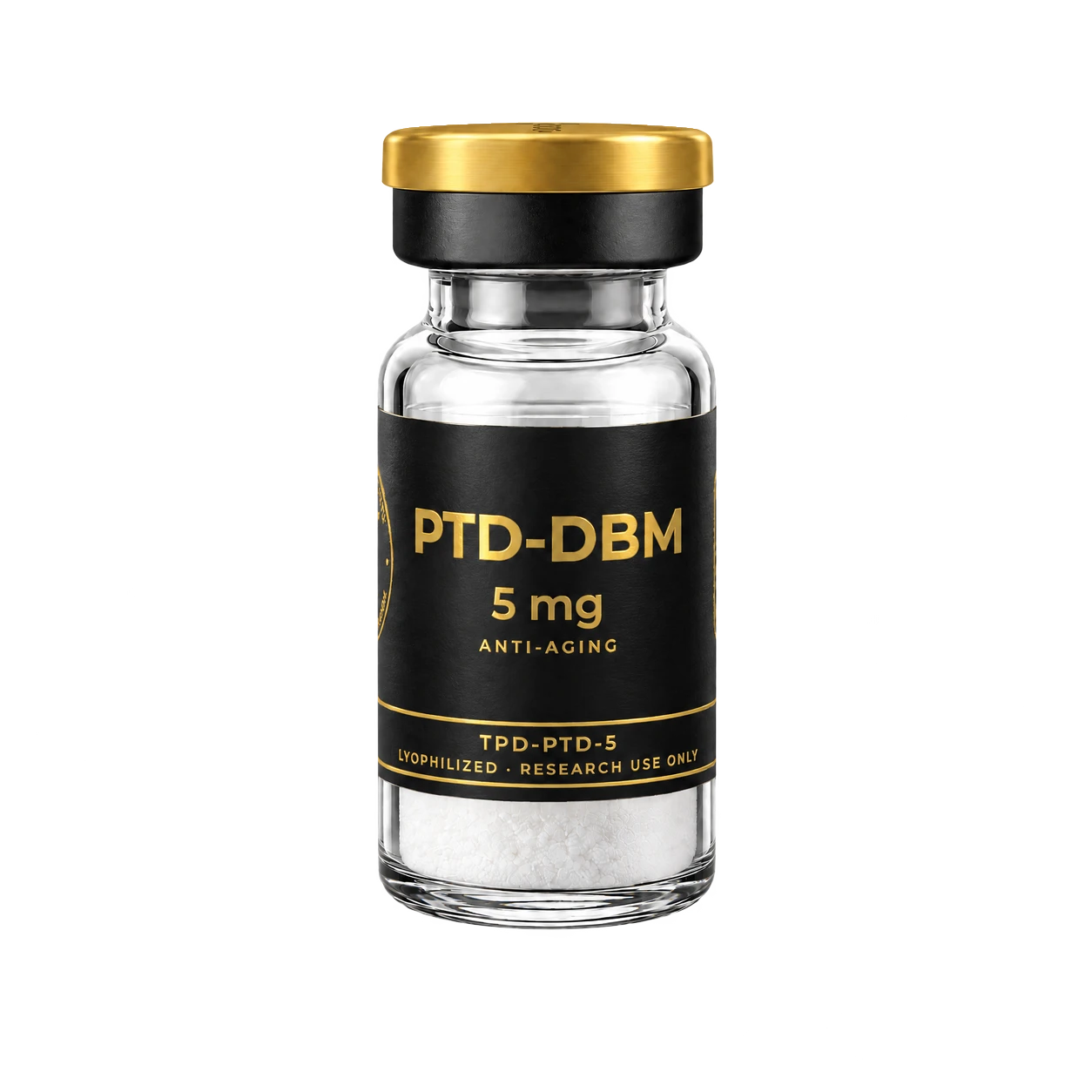
redzama tieši uz flakonaPTD-DBM
Hair & Skin
- Sūtām no Vācijas
Pasūtījums
- DHL ar izsekošanu
- Diskrēts iepakojums
Īsumā
PTD-DBM skaitļos
Galvenie rādītāji no mūsu leksikona.
Pilns leksikona ieraksts- Class
- Wnt-activating peptideCXXC5 disruptor
- Use
- Topical on the scalp
- Sizes
- 5 mg1 size in the shop
What studies show
The source in the lexicon- Lee, Choi et al., Journal of Investigative Dermatology, 2017
Produktam PTD-DBM vēl nav laboratorijas analīzes. Balsot par toPasūtiet testu, mēs apmaksājam pusiVisas laboratorijas analīzes
Zināšanas
Viss par PTD-DBM
Detalizēta informācija drīzumā.
Dozēšana
Ielādē dozēšanas informāciju …
Noderēs
Kas jums vēl būs vajadzīgs
Bakteriostatiskais ūdens tiek automātiski pievienots grozam. Šļirces un salvetes - ar vienu klikšķi.

Insulīna šļirces
10 gab. · 5.50 €

Spirta salvetes
50 gab. · 10 €
Cik daudz ūdens?
Vienības uz šļirces jūsu flakona izmēram.
Atvērt kalkulatoru →Is PTD-DBM approved or studied in humans?
No. There is no approval and as of 26 October 2026 no trial with PTD-DBM in the registry ClinicalTrials.gov. The published papers are cell cultures, scalp samples and mouse models.
How is PTD-DBM supposed to work?
CXXC5 is a natural brake of the Wnt signalling pathway: it binds Dishevelled and so dampens the signal. PTD-DBM carries exactly the binding piece of CXXC5 and occupies the spot. CXXC5 can no longer brake and beta-catenin rises.
What do the hair studies show?
Bald areas of human scalp contained more CXXC5. In mice PTD-DBM made hair grow back faster and new hair follicles form in wounds. Hair loss caused by the hormone PGD2 could also be reversed with it in mice.
What do the wound studies show?
On skin wounds in mice PTD-DBM sped up healing about as much as the growth factor EGF. Together with valproic acid the wounds were 42.8 percent newly covered with skin after 3 days, untreated 4.9 percent.
Why is it applied to the skin?
In the mouse studies PTD-DBM was applied to the depilated skin or directly onto the wound. The transport sequence is meant to help it get into cells. How much reaches the scalp in humans has not been studied.
Which side effects are known?
There are no solid human data. The entry mentions occasional mild scalp irritation, there is no study on it.
Saistītie
Saistītie produkti

Snap-8
Peptīdi · Kognīcija un miegs Kognīcija un miegs
1 izmērs
= 11.6 €/flakons

Healthy Hair Skin Nails Blend
Peptīdi · Īpašie produkti un atbalsts Īpašie produkti un atbalsts
1 izmērs
par pudelīti

Finasteride
Medikamenti · Hormoni un uroloģija Hormoni un uroloģija
3 izmēri

Dutasteride
Medikamenti · Hormoni un uroloģija Hormoni un uroloģija
1 izmērs
Laboratorijā pārbaudīts

PTD-DBM

