

Escolha o seu rótulo
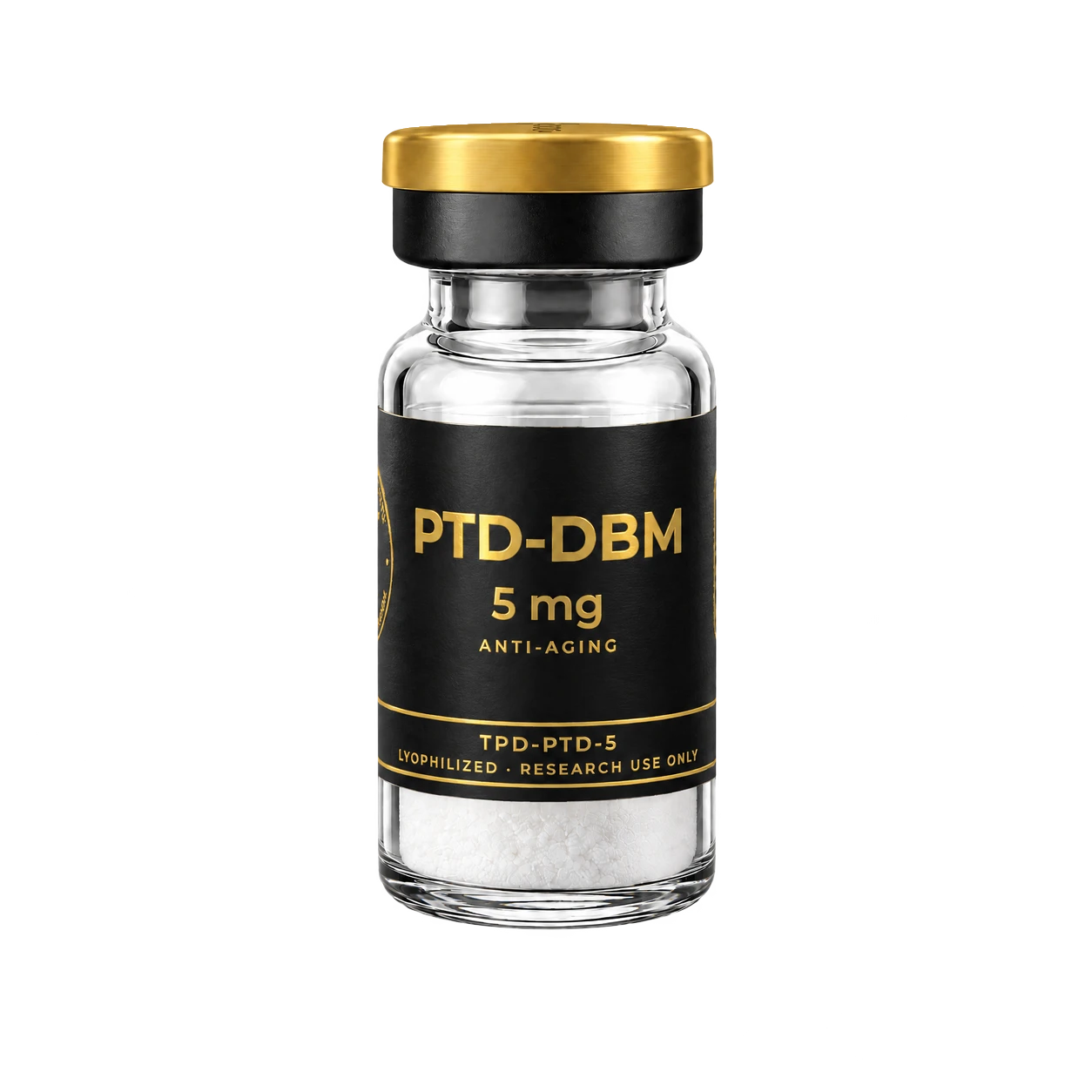
visível diretamente no frascoPTD-DBM
Hair & Skin
- Enviado da Alemanha
Encomenda
- DHL com seguimento
- Embalagem discreta
Num relance
PTD-DBM em números
Os valores-chave da nossa enciclopédia.
Entrada completa da enciclopédia- Class
- Wnt-activating peptideCXXC5 disruptor
- Use
- Topical on the scalp
- Sizes
- 5 mg1 size in the shop
What studies show
The source in the lexicon- Lee, Choi et al., Journal of Investigative Dermatology, 2017
Avaliações
O que dizem os clientes
Apenas encomendas reais que incluíam PTD-DBM.
Todas as avaliaçõesAinda não existe análise laboratorial para PTD-DBM. Vote neleMande testar por conta própria, pagamos metadeTodas as análises laboratoriais
Conhecimento
Tudo sobre PTD-DBM
Informação detalhada disponível em breve.
Dosagem
A carregar informação de dosagem …
Convém ter
O que precisa para isto
A água bacteriostática é adicionada automaticamente ao carrinho. Seringas e toalhetes com um clique.

Seringas de insulina
10 un. · 5.50 €

Toalhetes com álcool
50 un. · 10 €
Quanta água?
Unidades na seringa para o tamanho do seu frasco.
Abrir calculadora →Is PTD-DBM approved or studied in humans?
No. There is no approval and as of 26 October 2026 no trial with PTD-DBM in the registry ClinicalTrials.gov. The published papers are cell cultures, scalp samples and mouse models.
How is PTD-DBM supposed to work?
CXXC5 is a natural brake of the Wnt signalling pathway: it binds Dishevelled and so dampens the signal. PTD-DBM carries exactly the binding piece of CXXC5 and occupies the spot. CXXC5 can no longer brake and beta-catenin rises.
What do the hair studies show?
Bald areas of human scalp contained more CXXC5. In mice PTD-DBM made hair grow back faster and new hair follicles form in wounds. Hair loss caused by the hormone PGD2 could also be reversed with it in mice.
What do the wound studies show?
On skin wounds in mice PTD-DBM sped up healing about as much as the growth factor EGF. Together with valproic acid the wounds were 42.8 percent newly covered with skin after 3 days, untreated 4.9 percent.
Why is it applied to the skin?
In the mouse studies PTD-DBM was applied to the depilated skin or directly onto the wound. The transport sequence is meant to help it get into cells. How much reaches the scalp in humans has not been studied.
Which side effects are known?
There are no solid human data. The entry mentions occasional mild scalp irritation, there is no study on it.
Relacionados
Produtos relacionados

Snap-8
Péptidos · Cognição e sono Cognição e sono
1 tamanho
= 11.6 €/frasco

Healthy Hair Skin Nails Blend
Péptidos · Especialidades e suporte Especialidades e suporte
1 tamanho
por pote

Finasteride
Medicamentos · Hormonas e urologia Hormonas e urologia
3 tamanhos

Dutasteride
Medicamentos · Hormonas e urologia Hormonas e urologia
1 tamanho
Testado em laboratório

PTD-DBM

