This information is for research and educational purposes only. No medical recommendations. Products are not approved for human use. For health questions, consult a doctor.

Lexicon

Semaglutide Oral

Semaglutide as a tablet instead of an injection, the same GLP-1 compound but with sensitive absorption and lower bioavailability.

1 min read 6 sources

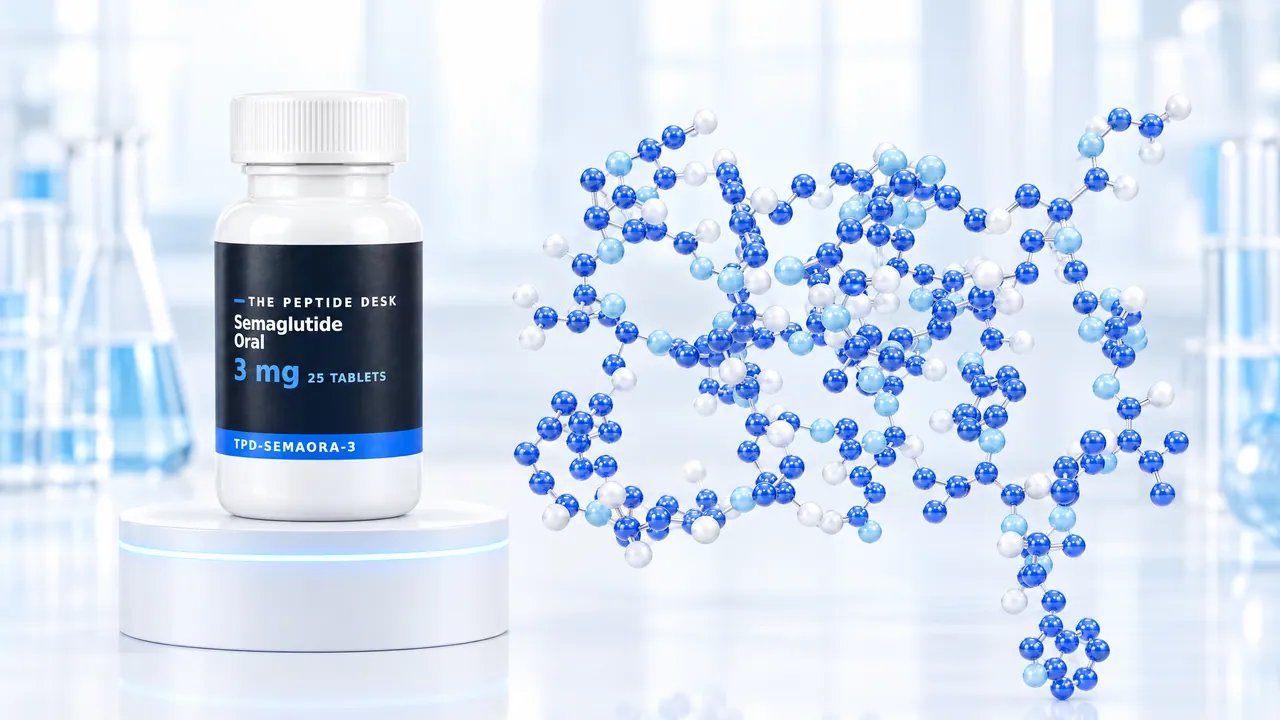
White tablet bottle with a black TPD label for Semaglutide Oral on a white podium, next to it a large molecule model of blue and white glass spheres in a bright lab
Compound approved · since 2017

Summary

At a glance

Sources checked on 26 Oct 2026

HbA1c versus placebo (PIONEER 1)
−1.1 percentage points

highest study dose, 26 weeks, type 2 diabetes without other drugs1

Cardiovascular events (SOUL)
−14 %

9,650 people with type 2 diabetes and vascular or kidney disease, median 49.5 months3

Weight versus placebo (PIONEER 1)
−2.3 kg

highest study dose, the smaller doses barely lowered weight1

Half-life
~1 week

still daily, because only a little reaches the blood per tablet4

  • Oral semaglutide is the same GLP-1 compound as the injection, only as a tablet. An absorption enhancer (SNAC) carries it through the stomach wall.64
  • According to the label only about 0.4 to 1 percent reaches the blood. Little water and a longer fasting time after the tablet improved absorption.4
  • In PIONEER 1 HbA1c fell against placebo by 0.6 to 1.1 percentage points depending on dose, weight only clearly on the highest study dose.1
  • In SOUL there were 14 percent fewer major cardiovascular events in type 2 diabetes with vascular or kidney disease. Nausea and other gastrointestinal complaints are the most common side effects.34
  • According to ChEMBL semaglutide has been approved since 2017. Everything here is the state of research, not a recommendation.6
Profile

Updated May 2026

Class
GLP-1 agonist

oral

Use
Oral, fasted

in mg/day

Half-life
long

dosed daily

WADA
not specifically listed
Sizes
2 sizes

3mg/25tabs, 7mg/25tabs

Contents 13 sections
  1. At a glance
  2. What is Semaglutide Oral?
  3. How it works
  4. How to take it
  5. Dosing
  6. What the research shows
  7. Research status
  8. Side effects
  9. Storage
  10. Related compounds
  11. FAQ
  12. Glossary
  13. Sources

What is Semaglutide Oral?

Semaglutide Oral is the same GLP-1 compound as injectable semaglutide (see lexicon entry), just as a tablet. Clinically it is approved as the first oral GLP-1 agent. The advantage: no injection. The catch: absorption through the stomach is sensitive and bioavailability is low.

Comparison

One, two or three receptors

Which receptors each compound targets, as stated in the TPD lexicon. Tap a card to open its entry.

Simplified: more receptors does not automatically mean better, each path also brings its own effects. 6

How it works

Like injectable semaglutide, the oral form activates the GLP-1 receptor: more satiety, dampened appetite, slower gastric emptying. To survive stomach acid it is formulated with an absorption enhancer. Still only a small part reaches the blood, hence the higher mg numbers than the injection.

The mechanism in detail is in the semaglutide entry.

Where it acts

Where oral semaglutide acts

Tap a point or a card. Colour = GLP-1 receptor, grey = observed in studies.

  1. Pancreas

    More insulin and less glucagon, both only when blood sugar is high4

    GLP-1
  2. Stomach

    Tablet absorbed in the stomach, gastric emptying after meals slightly delayed4

    GLP-1
  3. Heart

    14 percent fewer major cardiovascular events (SOUL)3

    Observed in trials
  4. Body weight

    Minus 2.3 kg versus placebo on the highest study dose (PIONEER 1)1

    Observed in trials
  5. Gut

    Nausea, diarrhoea and abdominal pain as the most common side effects4

    Observed in trials

Targets in the ChEMBL database6

Compound CHEMBL2108724: one recorded mechanism, agonist with direct binding to the human receptor.

GLP-1 receptor
Gene
GLP1R
UniProt
P43220
ChEMBL
CHEMBL1784
Action
Agonist, direct binding
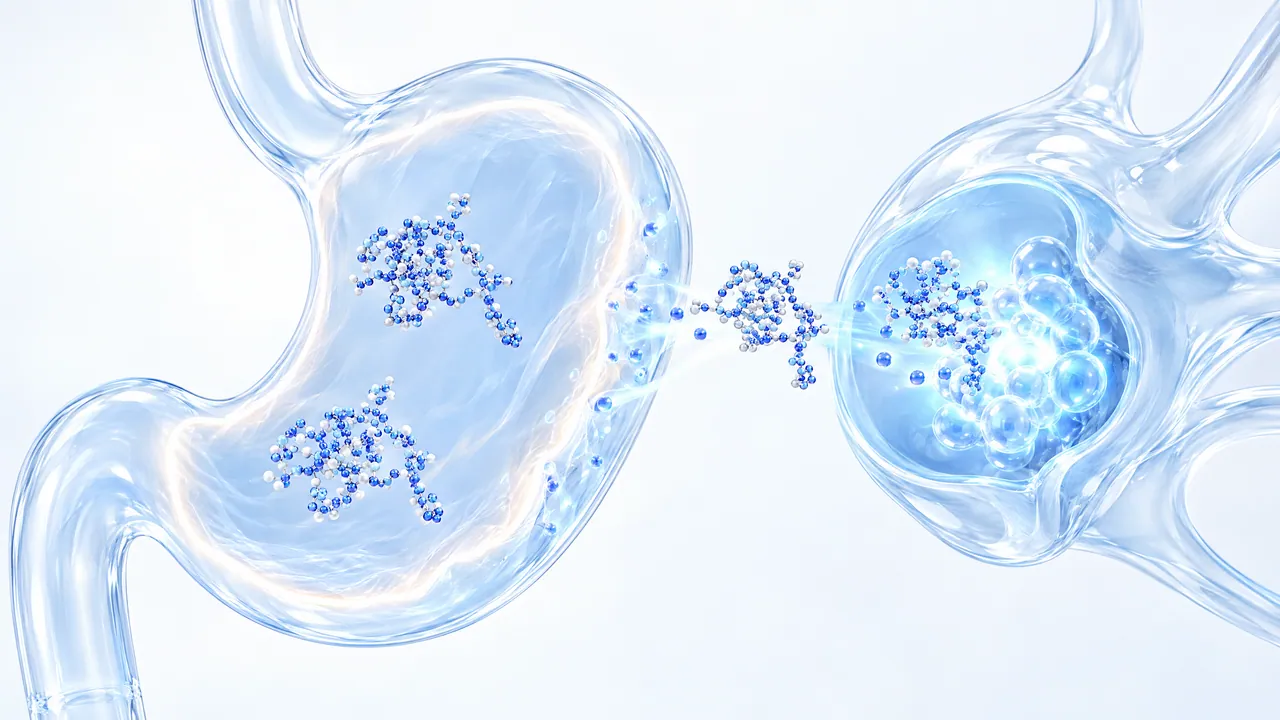
Stomach of translucent glass, blue molecules travel through the stomach wall to a glowing glass structure on the right
Activates the GLP-1 receptor: more satiety, slower stomach emptying. Symbolic image.

How to take it

Intake here is decisive for the effect:

  • In the morning fasted, with at most half a glass of water.
  • Then wait at least 30 minutes before eating, drinking or taking other tablets.
  • More water or food markedly worsens absorption.
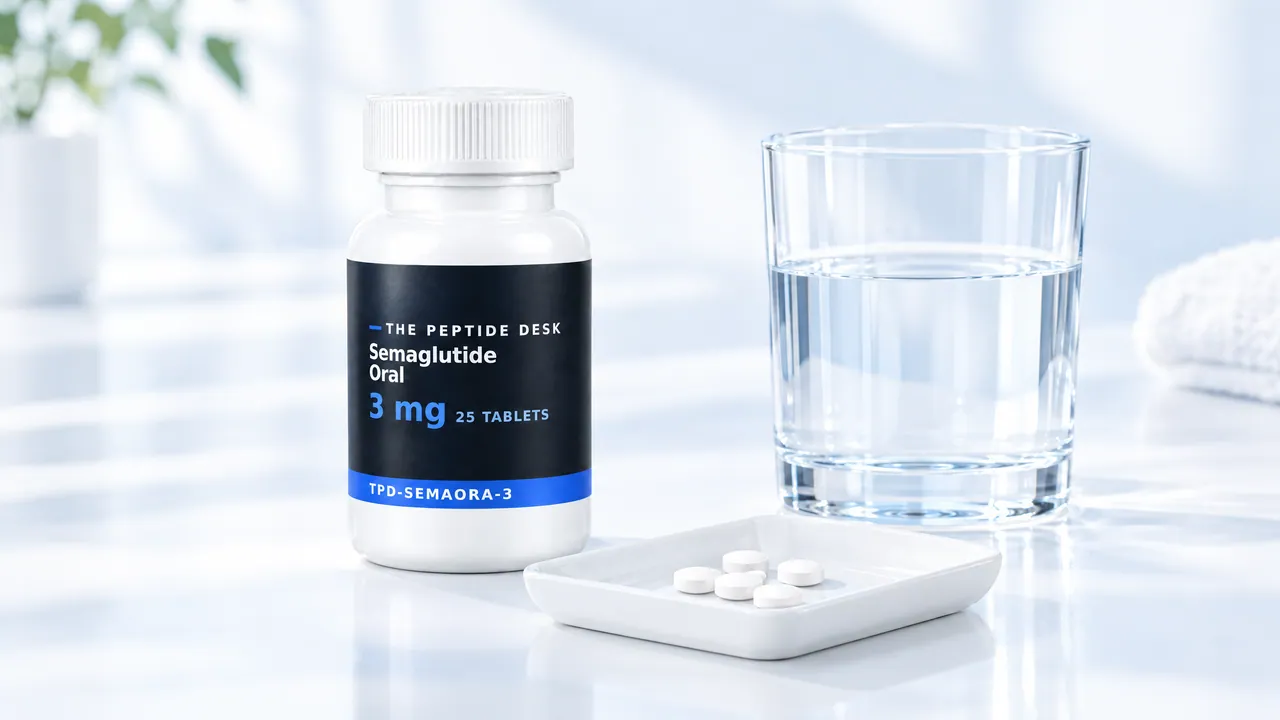
White tablet bottle with a black TPD label for Semaglutide Oral, a glass of water and a small dish with white tablets beside it
In the morning on an empty stomach with at most half a glass of water, then wait at least 30 minutes. Symbolic image.

Dosing

Dosing

Dosing, titration and syringe

Loading the dosing information …

  • Getting started and stepping up, drawn as a staircase
  • Units on the U-100 syringe for every step
  • How long one vial lasts

What the research shows

The PIONEER 1 study (Aroda, 2019) showed that oral semaglutide as monotherapy in type 2 diabetes lowered long-term blood sugar and weight compared with placebo. Oral semaglutide is approved as the first GLP-1 tablet, so the data is solid, the sensitive absorption is the sticking point in everyday use.

Study results

What the trials measured

Interactive: switch tabs, tap points, show or hide arms. Arms are named relative to each other, no dosing advice.

Long-term blood sugar versus placebo after 26 weeks1

703 people with type 2 diabetes, diet and exercise only, mean baseline 8.0 percent

All participants1 Regardless of discontinuation or rescue drugs
Lowest study dose -0.6 pp
Middle study dose -0.9 pp
Highest study dose -1.1 pp
When taken as planned1 Without discontinuation and without rescue drugs
Lowest study dose -0.7 pp
Middle study dose -1.2 pp
Highest study dose -1.4 pp

Difference from placebo in percentage points, all three doses significantly better than placebo.

Weight versus placebo after 26 weeks1

Same trial, difference from placebo

All participants1
Lowest study dose -0.1 kg
Middle study dose -0.9 kg
Highest study dose -2.3 kg
When taken as planned1
Lowest study dose -0.2 kg
Middle study dose -1.0 kg
Highest study dose -2.6 kg

Weight loss was clear only on the highest study dose. The trial tested blood sugar, not weight loss.
Share with a major cardiovascular event23

Cardiac death, myocardial infarction or stroke, against placebo

PIONEER 62 3,183 people, median 15.9 months
Placebo 4.8%
Oral semaglutide 3.8%
SOUL3 9,650 people, median 49.5 months
Placebo 13.8%
Oral semaglutide 12.0%

PIONEER 6 was only meant to show safety and confirmed that the risk is not higher. SOUL showed a benefit (hazard ratio 0.86).

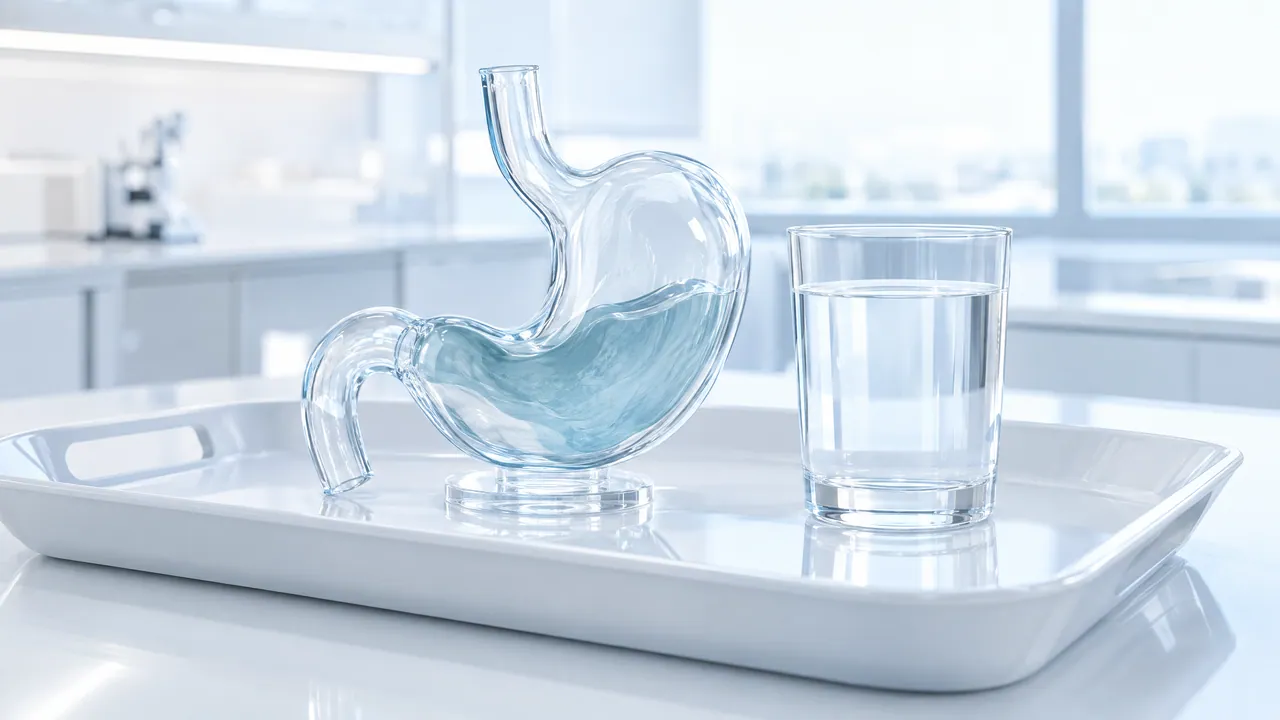
Glass stomach model with light blue liquid and a glass of water on a white tray in a bright lab
Lower long-term blood sugar and weight than with placebo in type 2 diabetes. Symbolic image.

Research status

Where the research stands

Semaglutide has been approved since 2017, the tablet is also approved according to the US label. On ClinicalTrials.gov a search for oral semaglutide gives 204 trials. Shown are the phase 3 trials from this entry. As of 26 Oct 2026. 5

  1. Preclinical Principle: activation of the GLP-1 receptor
  2. Phase 1 no registered trial
  3. Phase 2 no registered trial
  4. Phase 3 3 trials, 3 completed
  5. Approval since 2017
13,537 participants in phase 3 Approved: ChEMBL lists semaglutide with phase 4 as the highest phase and first approval in 2017, the tablet has its own US label.6
Show all 3 phase 3 trials on a timelineHide timeline 3 completed 0 running 3 with results
Phase 3

Bar: start to primary endpoint (planned for running trials). Green = completed, blue = progress until 26 Oct 2026.

Side effects

  • Mainly gastrointestinal: nausea, fullness, constipation or diarrhea, especially when dosing up.
  • A slow ease-in keeps this small.
  • More details in the semaglutide entry.

Tolerability

Gastrointestinal side effects compared with placebo

Out of 100 participants per group, how many had the event over a mean of 41.8 weeks.

6 of 100 Placebo
11 of 100 Middle study dose
20 of 100 Highest study dose
Event PlaceboMiddle study doseHighest study dose
Nausea4 6%11%20%
Abdominal pain4 4%10%11%
Diarrhoea4 4%9%10%
Decreased appetite4 1%6%9%
Vomiting4 3%6%8%
Constipation4 2%6%5%

In SOUL 15.5 percent on semaglutide and 11.6 percent on placebo stopped because of a side effect. Serious adverse events were not more frequent overall (47.9 versus 50.3 percent).43

Storage

Store dry, cool and protected from light, out of reach of children. Keep the original container closed and mind the expiry date.
Three white tablet bottles on a bright shelf next to a folded light blue towel
Dry, cool and away from light. Symbolic image.

Related

Related compounds

Same receptors, blends with Semaglutide Oral or a different path: all in the TPD lexicon.

FAQ

Common questions about Semaglutide Oral

Short answers, each backed by the sources below.

Is this the same compound as the injection?

Yes. Semaglutide is a GLP-1 analogue with 94 percent sequence match to the body's own GLP-1. The tablet also contains SNAC, which enables absorption in the stomach. Because only a small part arrives, the milligram figures are higher than with the injection.4

Is oral semaglutide approved?

Yes. ChEMBL lists semaglutide as an approved compound with first approval in 2017, the tablet has its own US label. On ClinicalTrials.gov a search for oral semaglutide gives 204 trials (as of 26 October 2026). Everything here is the state of research, not a recommendation.645

Why fasted and with little water?

According to the label only about 0.4 to 1 percent reaches the blood. In studies in healthy people absorption was higher with little water than with a large glass. The longer nothing was eaten after the tablet, the more arrived. Hence the strict intake rule in the entry.4

What did PIONEER 1 show?

703 people with type 2 diabetes using only diet and exercise received one of three doses or placebo. After 26 weeks HbA1c was 0.6 to 1.1 percentage points lower than with placebo. Weight fell clearly only on the highest study dose, by 2.3 kg more than on placebo.1

What about the heart?

PIONEER 6 with 3,183 people showed that cardiovascular risk does not rise (3.8 versus 4.8 percent). SOUL with 9,650 people with vascular or kidney disease found 12.0 instead of 13.8 percent major events over about four years, so 14 percent fewer.23

Which side effects are typical?

Mainly gastrointestinal complaints. According to the label 20 percent had nausea on the highest study dose, 6 percent on placebo. In addition there were abdominal pain, diarrhoea, decreased appetite, vomiting and constipation. The label also names rare risks such as pancreatitis and gallbladder problems.4

Glossary

Terms explained briefly

Dotted words in the text open these explanations directly.

Agonist
Substance that activates a receptor, like the body's own signal.
Albumin
Most common protein in the blood. Semaglutide binds to it, which extends the half-life to about one week.
Bioavailability
Share of a compound that actually arrives in the blood. For the tablet about 0.4 to 1 percent.
Gastric emptying
How quickly the stomach passes food on to the gut. Slower means fuller for longer.
GLP-1
Gut hormone released after eating. It promotes insulin, slows glucagon and promotes fullness.
Glucagon
Pancreatic hormone that raises blood sugar. Counterpart of insulin.
Hazard ratio
Ratio of the event rate of two groups over time. 0.86 means 14 percent fewer events.
HbA1c
Long-term blood sugar. Shows the average blood sugar over the last two to three months.
SNAC
Absorption enhancer in the tablet that protects semaglutide in the stomach and carries it through the stomach wall.
Type 2 diabetes
Form of diabetes in which insulin works less well and over time too little is made.

Evidence

Sources

Show all 6 sourcesHide sources 3 Studies1 Trial registry2 Database checked 26 Oct 2026

Studies

  1. PIONEER 1: tablet alone in type 2 diabetes

    Aroda et al., Diabetes Care, 2019

    Checked 26 Oct 2026 via doi.org, Crossref, PubMed
  2. PIONEER 6: cardiovascular safety

    Husain et al., New England Journal of Medicine, 2019

    Checked 26 Oct 2026 via doi.org, Crossref, PubMed
  3. SOUL: cardiovascular benefit at high risk

    McGuire et al., New England Journal of Medicine, 2025

    Checked 26 Oct 2026 via doi.org, Crossref, PubMed

Trial registry

  1. Trials on oral semaglutide on ClinicalTrials.gov

    ClinicalTrials.gov, U.S. National Library of Medicine

    Checked 26 Oct 2026 via ClinicalTrials.gov API v2

Database

  1. US prescribing information for semaglutide tablets

    DailyMed, U.S. National Library of Medicine (Stand 30.01.2026)

    Checked 26 Oct 2026 via DailyMed, openFDA
  2. Mechanism and approval in ChEMBL

    ChEMBL, EMBL-EBI (CHEMBL2108724)

    Checked 26 Oct 2026 via ChEMBL

In the shop

Semaglutide Oral in the catalog

Sizes, prices and shipping times are on the product page.

To the product