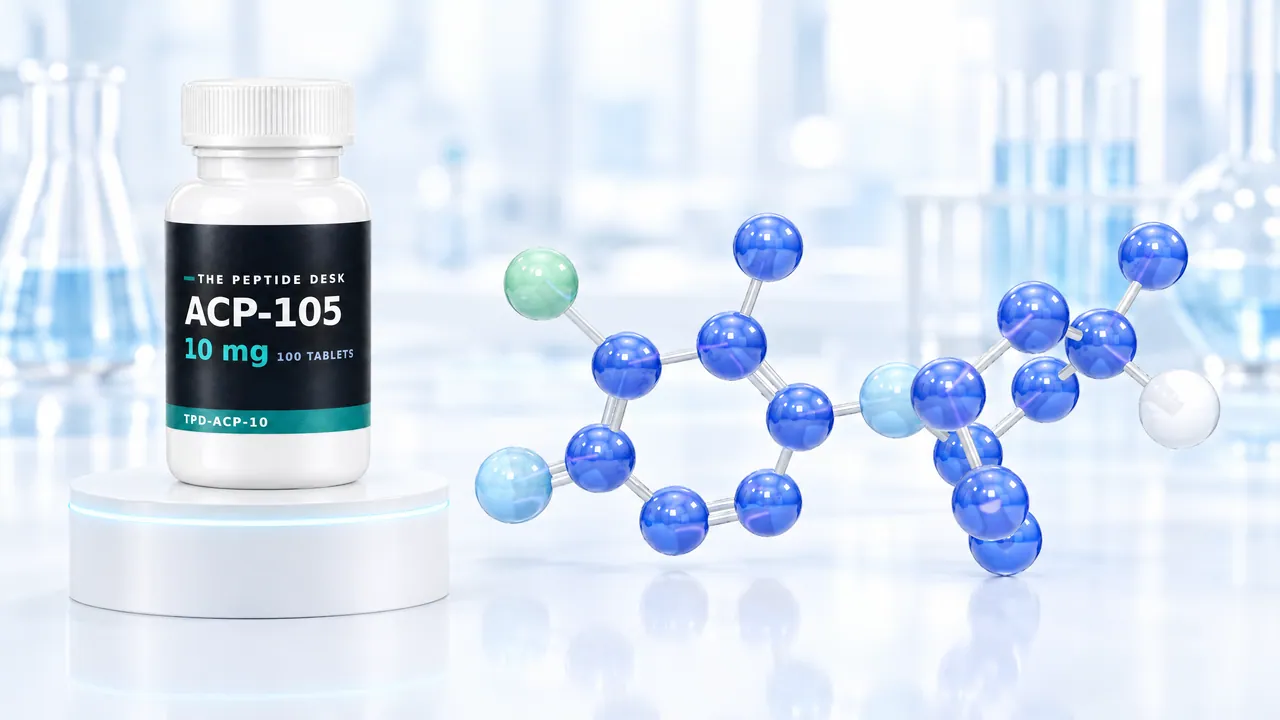
What is ACP-105?
ACP-105 is a non-steroidal selective androgen receptor modulator (SARM) from ACADIA Pharmaceuticals, the same company AC-262 comes from. It was found in a high-throughput screen and described in 2009 as a partial androgen receptor agonist with anabolic effects in rats.
Research groups later used ACP-105 as a tool to study androgen effects in the brain, for example in an Alzheimer mouse model. There was never any clinical development. In humans there is only one doping control paper in which one person took a single 100 microgram dose. In the range ACP-105 comes as a tablet with 10 mg.
This information is for research and educational purposes only. No medical advice.
Comparison
SARMs compared
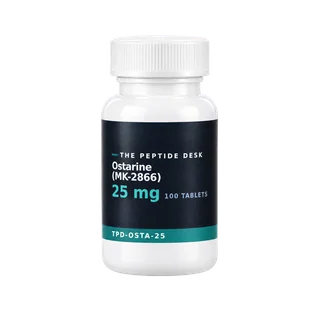
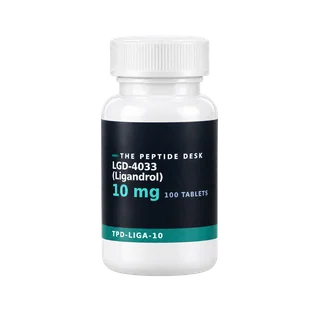
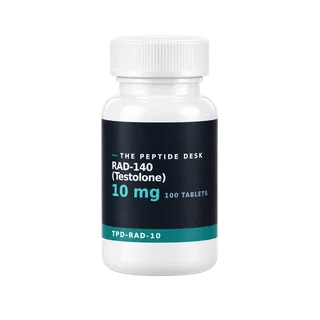
Five SARMs from the TPD lexicon, as described there. Tap a card to open its entry.
Simplified: all act on the androgen receptor. According to their first descriptions ACP-105 and AC-262 activate it only partly. There is no head-to-head comparison in humans. 18
How it works
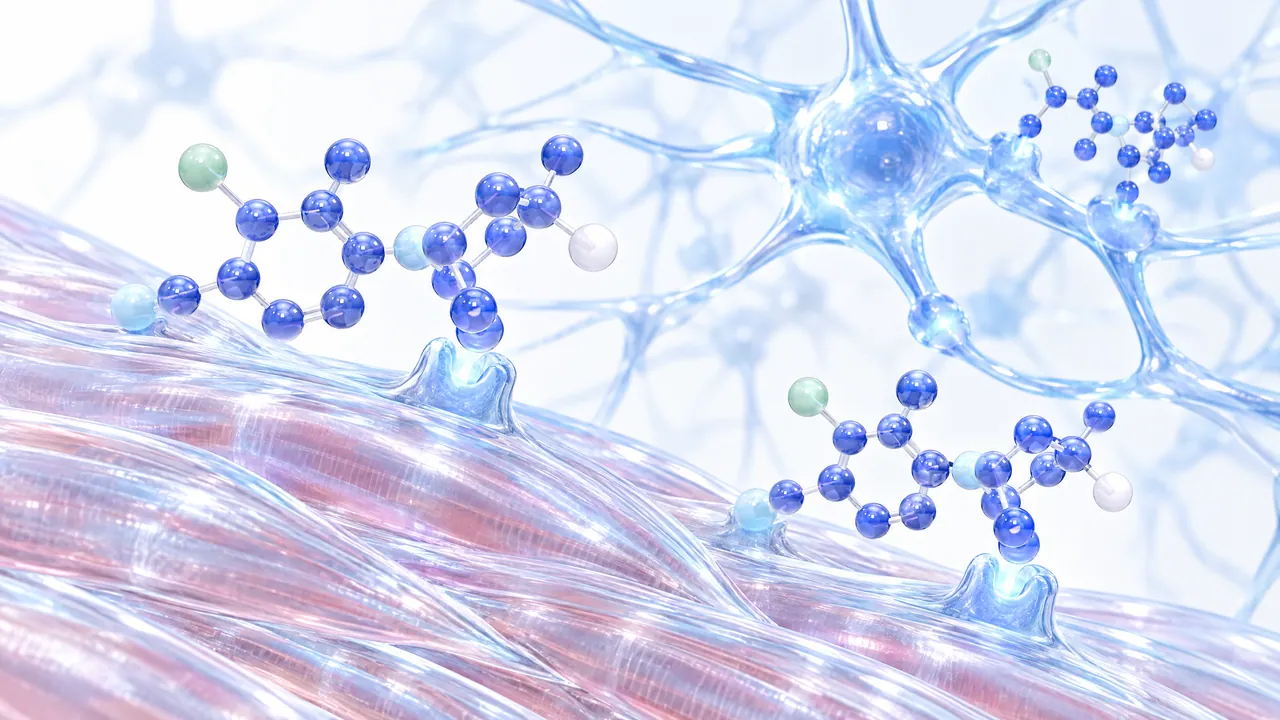
ACP-105 binds the androgen receptor and only partly activates it, the response stays below that of testosterone. In castrated rats it improved anabolic readouts over two weeks. That is the typical SARM pattern: an effect on muscle with less effect on androgenic tissues.
The androgen receptor also sits in the brain. There an androgen signal can influence the breakdown of amyloid and change behaviour. That is why ACP-105 appeared in mouse studies on anxiety, memory and radiation damage. As an androgen receptor agonist it would likely brake the body's own hormone axis like all SARMs, but this was never measured for ACP-105.
Where it acts
Where ACP-105 acted in experiments
Tap a point or a card. Colour = androgen receptor, grey = observed. Effects only from animal studies.
- Skeletal muscle
Better anabolic readouts, two weeks in castrated rats1
AR - Brain
Less anxiety-like behaviour in an Alzheimer mouse model, with an ER beta agonist less amyloid2
AR - Liver
Broken down to 18 metabolites in liver microsomes (lab assay)4
Observed in trials - Kidney and urine
Seven metabolites in urine after a microdose (one person)4
Observed in trials
Known targets10
Compound PubChem CID 11638442: one described target, Partial agonist (cell assay).
- Gene
- AR
- UniProt
- P10275
- ChEMBL
- CHEMBL1871
- Action
- Partial agonist (cell assay)
Use and dosing
Dosing
Dosing, titration and syringe
Loading the dosing information …
- Getting started and stepping up, drawn as a staircase
- Units on the U-100 syringe for every step
- How long one vial lasts
What the research shows
Schlienger and colleagues (J Med Chem 2009) described the discovery of ACP-105 as a potent partial androgen receptor agonist. In a two-week study in castrated rats it improved anabolic readouts.
George and colleagues (ACS Chem Neurosci 2013) gave ACP-105 to castrated mice of an Alzheimer model. On its own it reduced anxiety-like behaviour. Only combined with an estrogen receptor beta agonist did amyloid-degrading enzymes rise, brain amyloid fall and memory improve. Dayger and colleagues (Brain Res 2011) irradiated female mice: without ACP-105 motor coordination suffered, with ACP-105 it did not.
Broberg and colleagues (J Chromatogr B 2023) found seven metabolites in one person's urine after a single 100 microgram dose. Vignali and colleagues (J Xenobiot 2023) summarise SARM safety data: liver injury in case reports and ALT rises in trials. No such data exist for ACP-105 itself.
Study results
What the trials measured
Interactive: switch tabs, tap points, show or hide arms. Arms are named relative to each other, no dosing advice.
What 44 SARM products bought online contained7
Share of products in percent, analysed to doping control standard
Values from the abstract (USA, 2016). There are no numerical effect data on ACP-105 itself, the animal studies only report the direction in their abstracts. The analysis shows the risk of unverified products, not the effect of a specific SARM.

Research status
Where the research stands
Where the compound stands on the way from lab research to approval. As of 26 Oct 2026. 9
Side effects
Without human studies this list rests on the animal data and on what is known for SARMs as a class.
- Suppression of the testosterone axis. Expected for androgen receptor agonists. How strong it is with ACP-105 has not been measured.
- Liver. Liver injury has been described for SARMs in case reports. In trials liver values rose frequently.
- Lipids. Falling HDL is common with androgen receptor agonists.
- Mood and behaviour. In mice ACP-105 changed anxiety and fear behaviour. What that means in humans is open.
- Unknowns. Pharmacokinetics, interactions and long-term effects have not been studied.
This classification does not replace medical advice.
Detection and competition
Under the WADA list ACP-105 falls under S1.2 (other anabolic agents) and is banned at all times. Doping control labs know its metabolites from horse and human samples and have proposed the two main ones as detection targets.
Anyone subject to testing should assume ACP-105 will be detected. Even a 100 microgram microdose produced measurable metabolites in urine.
Storage
Store dry, at room temperature and protected from light, keep the tin closed. Do not keep it in the bathroom, the humidity there degrades tablets.
Keep out of reach of children and mind the expiry date. Do not decant tablets into unlabelled containers.