What is Anastrozole?
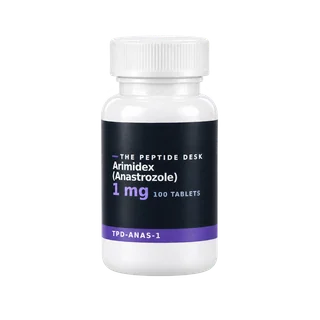
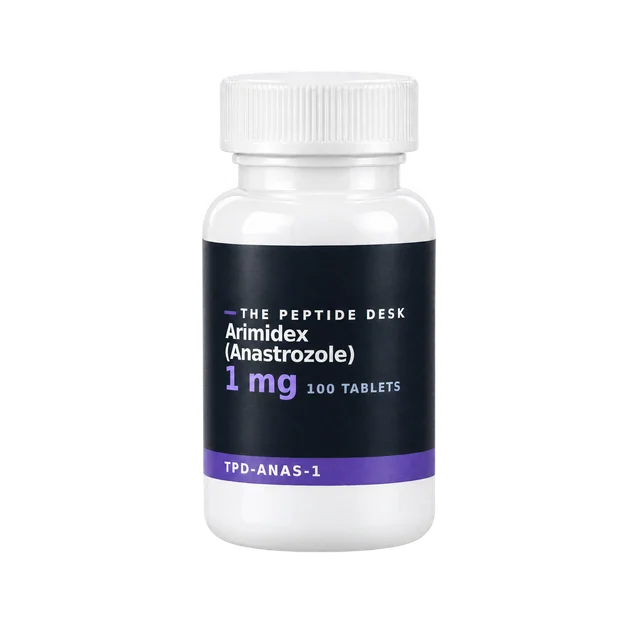
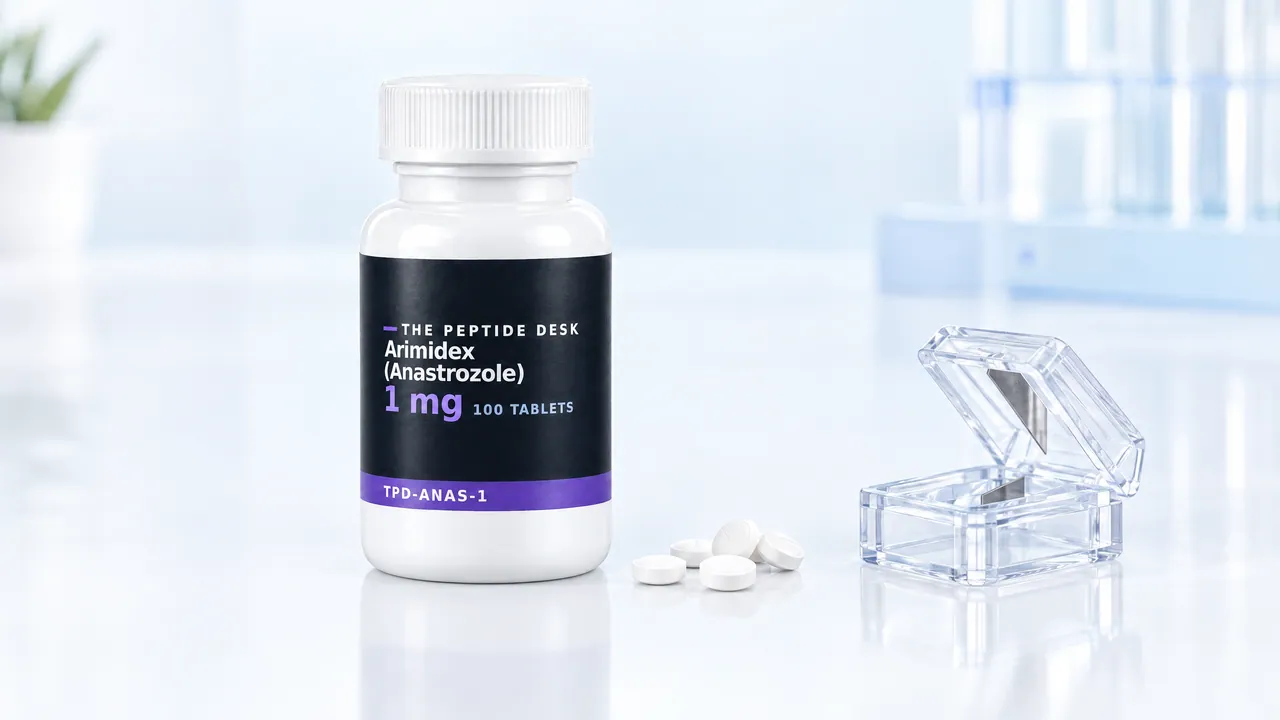
Anastrozole (brand name Arimidex) is a non-steroidal, reversible aromatase inhibitor. It blocks the aromatase enzyme that converts testosterone to estradiol. In anabolic research contexts it is used to control estrogen side effects from aromatizing compounds (e.g. testosterone).
This information is for research and educational purposes only. No medical advice.
Comparison
Estrogen blockers compared
Aromatase inhibitors and estrogen receptor modulators from the TPD lexicon, as described there. Tap a card to open its entry.
Simplified: aromatase inhibitors lower the production of estradiol, SERMs block the receptor and leave estradiol in the blood. Letrozole lowered estrogens somewhat more than anastrozole head to head. 29
How it works
Anastrozole binds reversibly to aromatase and thereby lowers blood estradiol by up to 80%. Less estradiol means less water retention and a lower gynecomastia risk. Reversible means: after stopping, aromatase activity normalizes again.
Where it acts
Where anastrozole acted in studies
Tap a point or a card. Colour = aromatase, grey = observed in studies.
- Hormones in the blood
Whole-body aromatase 97 percent inhibited, estradiol about 85 percent lower2
CYP19A1 - Testes
Testosterone about two thirds higher in older men3
Observed in trials - Pituitary
Less estradiol feedback, LH rose3
Observed in trials - Bone
Spine bone density fell in older men, more fractures than with tamoxifen5
Observed in trials - Joints
Joint pain more common than with tamoxifen (15 versus 11 percent)7
Observed in trials - Liver
About 85 percent of breakdown runs through the liver7
Observed in trials
Targets in the ChEMBL database9
Compound CHEMBL1399 (Anastrozol): one recorded mechanism, Inhibitor, direct binding.
- Gene
- CYP19A1
- UniProt
- P11511
- ChEMBL
- CHEMBL1978
- Action
- Inhibitor, direct binding

Use and dosing
Dosing
Dosing, titration and syringe
Loading the dosing information …
- Getting started and stepping up, drawn as a staircase
- Units on the U-100 syringe for every step
- How long one vial lasts
What the research shows
The large ATAC study (Lancet Oncology, 2008) compared anastrozole with tamoxifen in postmenopausal early breast cancer over 100 months and established the long-term efficacy and tolerability of anastrozole. That is the clinical basis from which the estrogen-lowering potency is well documented.
Study results
What the trials measured
Interactive: switch tabs, tap points, show or hide arms. Arms are named relative to each other, no dosing advice.
Hormones in older men with low testosterone3
Change from baseline, in percent (calculated from the means)
37 men aged 62 to 74. The abstract gives means before and after, for example 343 to 572 ng/dl total testosterone with daily dosing. All changes were significant versus placebo, the abstract does not give placebo values. Estradiol stayed within the normal range.
Spine bone density in older men5
Change after one year, in percent (calculated from the means)
69 men aged 60 or older. Testosterone rose by about 64 percent after three months and estradiol fell by about 20 percent. Bone density still fell: aromatase inhibition did not improve these men's bones.
Estrogens in the blood, anastrozole versus letrozole2
Mean reduction in percent, six weeks each in crossover
12 postmenopausal women with breast cancer. Whole-body aromatase was 97.3 percent inhibited with anastrozole and more than 99.1 percent with letrozole.
Recurrence in hormone-sensitive early breast cancer1
Share with recurrence, in percent
Postmenopausal women, median follow-up 100 months. The gap kept widening after treatment ended. There was no difference in overall survival.
Breast cancer in women at increased risk6
Share with breast cancer after a median of 5 years, in percent (calculated)
Calculated from 85 of 1,944 women on placebo and 40 of 1,920 on anastrozole. Hazard ratio 0.47. Deaths evenly distributed (17 versus 18).

Research status
Where the research stands
Anastrozole has been approved since 1995. On ClinicalTrials.gov 493 trials list anastrozole among their interventions, often in cancer treatment. Shown are registered trials related to this entry. ATAC ran under an ISRCTN number. As of 26 Oct 2026. 10
- Preclinical Development as a non-steroidal aromatase inhibitor
- Phase 1 no registered trial
- Phase 2 1 trial, 1 completed
- Phase 3 2 trials, 2 completed
- Approval in the USA since 1995
Show all 3 phase 2 and 3 trials on a timelineHide timeline
NCT00104572 · 44 participants, started Mar 2004, primary endpoint reached Dec 2013. Tests several agents.
Registry entry ↗ · Results not yet in PubMed
IBIS-II · NCT00078832 · 3,864 participants, started Sept 2003, primary endpoint reached Dec 2013.
Registry entry ↗ · Results: Cuzick et al., The Lancet, 2014
IBIS-II DCIS · NCT00072462 · 2,980 participants, started Sept 2003, primary endpoint reached Dec 2015. Tests several agents.
Registry entry ↗ · Results not yet in PubMed
Bar: start to primary endpoint (planned for running trials). Green = completed, blue = progress until 26 Oct 2026.
Side effects
- Too-low estradiol: joint pain, libido loss, fatigue, poor sleep - the most common problem with overdosing.
- Lipids: very low estradiol worsens the cholesterol profile.
- Bone density: relevant with long-term use.
Tolerability
Side effects in ATAC
Out of 100 participants per group, how many had the event over about 5 years of treatment.
| Event | Tamoxifen | Anastrozole |
|---|---|---|
| Hot flushes7 | 41% | 36% |
| Arthritis7 | 14% | 17% |
| Joint pain7 | 11% | 15% |
| Osteoporosis7 | 7% | 11% |
| Fracture7 | 7% | 10% |
| Raised cholesterol7 | 4% | 9% |
Values from the US label (ATAC, about 3,090 women per group). The comparison is tamoxifen, not placebo. Fractures were only more common during treatment, not afterwards.71
Storage
Store dry and protected from light. Out of reach of children.